
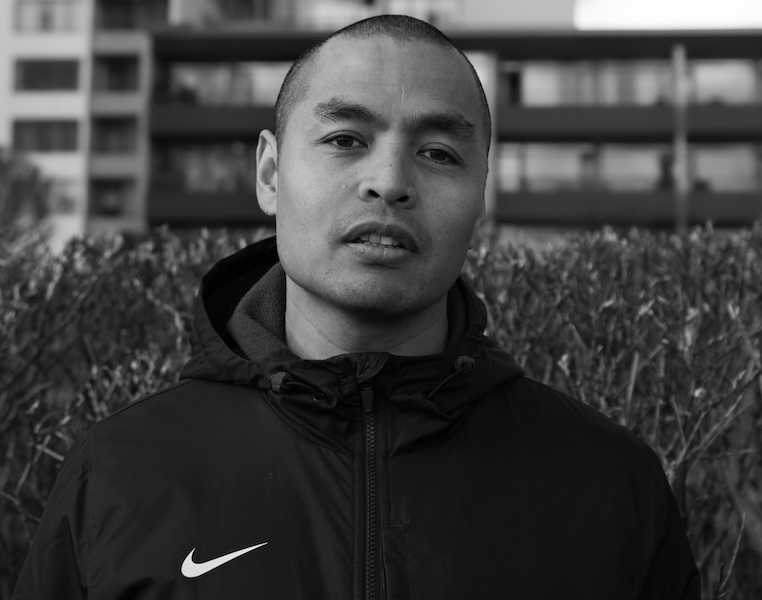



Today we’re dipping in with Prisma Deer, DJ, producer, architect, and the driving force behind Cross Fade Records. Hailing from Costa Rica, Prisma Deer has built a reputation for weaving together House and Disco with deeper shades of Nu Disco and Indie Dance, always with a strong sense of space, rhythm, and emotion.
He’s back on his own label with a brand new single, ‘Fou de Joie,’ a cosmic, feel-good disco cut powered by a bold Moog bassline, evolving synths, and sensual French vocals that pull you straight into orbit. We caught up with him to talk about the new record, the vision behind Cross Fade, his creative process, and how architecture, sound, and joy all collide in his music.
WWD: ‘Fou de Joie’ translates to mad with joy, what emotional or physical state were you trying to capture with this track and when did you know it had that euphoric energy?
In general I was inspired by classic Italo Disco tracks and wanted to try my own version of it. I wanted to create something energetic but at the same time atmospheric. I think the combination of the bassline and percussion give the energy to the track and the synth layers that are placed along different moments of the track create that atmospheric feeling.
WWD: The track dives into a very cosmic disco space with the driving Moog bassline and evolving synth layers. Can you walk us through the production process and how those elements came together?
The core of the track began with the driving Moog bassline. I started with simple arpeggiated notes and then introduced modulations to vary the rhythm and establish its strong presence. Once the bass and the initial percussion were locked down, I sketched out a rough structure. Then the workflow focused on adding and removing synth layers every 16 or 32 bars to create dynamic tension and movement. Since the bassline had such a dominant presence, the rest of the process became about using minor effects and subtle synth changes.
WWD: The French vocals add a sensual, mysterious edge. Why did you choose French for this record, and how important is language as a texture in your productions?
The choice of French came because although Spanish is my first language (I’m based in Costa Rica), my girlfriend speaks French, and I’ve recently started learning as well. We decided to collaborate creatively by recording her voice. We recorded several words and phrases, and then we experimented by adding echo and delay as well as recording the same phrases in a whispering way. For me, language is extremely important as a textural element; it provides a unique identity and meaning to a track that instruments alone cannot. Using these custom vocals felt more original and personal than using vocals from a sample pack. This track is also my way to connect with my girlfriend creatively, and I certainly hope it’s the first of many collaborations we do together.
WWD: As the founder of Cross Fade Records, how does releasing your own music on the label differ creatively or strategically from working with other labels?
When releasing on my own label, I have 100% creative freedom over the music. This means I can produce tracks that might not fit a rigid genre box or the specific style often necessary for external labels. Strategically, this also gives me complete control over the entire finished product: I choose the mastering engineer, approve the visual aesthetic, and set the release schedule I prefer.
WWD: Cross Fade has developed a clear identity over time. How would you define the label’s sound and philosophy today, and how does ‘Fou de Joie’ fit into that vision?
Cross Fade Records is fundamentally rooted in House and Disco, while continually exploring various subgenres, including Nu Disco, Deep House, and Jacking House. Our philosophy is to foster a global community of artists, yet we maintain a special focus on supporting producers from Costa Rica to help grow and contribute to the local electronic music scene. ‘Fou de Joie’ perfectly embodies this vision, as it blends all the different styles present on the label through my own interpretation
WWD: You move fluidly between House, Disco, Nu Disco, Indie Dance, and deeper club styles. What influences are shaping your sound right now, both musically and culturally?
My sound is shaped by a combination of my professional background and my cultural origin. As an architect, my work often requires me to visit coastal areas and natural environments in Costa Rica. This exposure has become a fundamental influence, as the presence of the ocean, the natural sounds, and the vast landscapes serve as inspiration for the atmospheric textures and sense of space in my productions. Additionally, the local electronic scene and the exchange with other DJs are vital to the evolution of my sound. Observing what other DJs in the country mix live, and the conversations with friends, directly influence how my style develops over time. Ultimately, I aim for a sound that is both reflective of my environment and continuously evolving.
WWD: Your background as an architect is a unique part of your story. How does thinking in terms of space, structure, and acoustics influence the way you build a track or DJ set?
My background in architecture fundamentally influences my approach to building a track or DJ set. Both music and architecture are creative disciplines, and they share design processes that I apply from one field to the other. Just as my architectural process requires sketching and taking notes, I apply similar techniques to music. I like to draw the structure of a song to visualize its dynamics, marking the changes, breaks, and moments of tension. I also list key ideas or elements I plan to implement to maintain focus.
For me, the most important influence is conceptual priority. In architectural design, I seek to focus on the core message and intention, and I do the same in music. I prioritize the central idea over aesthetics. I seek to not just create something that “sounds nice,” but a piece that has a defined purpose and solid structure.
If ‘Fou de Joie’ were a physical space or architectural structure, what would it look or feel like and where would you want people to experience it?
The track’s energetic and constantly evolving nature could translate into a versatile public space, such as a pedestrian boulevard or a large urban park. These spaces are ideal because they feature ever-changing elements—such as benches for temporary rest, moments of visual surprise, or sudden elevation changes—that interrupt the main flow, perfectly mirroring the structure of the track’s breaks and builds. I would love for people to experience this track in such a setting and walk with their headphones on, allowing the dynamic progression of the music to lead them forward on their journey.
WWD: You host a weekly radio show and are deeply embedded in the Costa Rican scene. How has the local culture and environment influenced your creative output over the years?
I’m fortunate to live in a country that, despite its size, boasts a diverse and artistic electronic music scene. My weekly radio show, which airs on a local FM station and is reaching its 200th guest, is a key platform that keeps me actively searching for new DJs and talents who play House and Disco to contribute guest mixes. This continuous exposure to the work of Costa Rican artists is a significant influence on my creative output and the way I manage my record label Cross Fade.
WWD: What’s the perfect setting to hear ‘Fou de Joie’ for the first time… sunrise, sunset, sweaty club at 3am, or somewhere unexpected?
I would certainly choose a sweaty club at 3 AM. I feel the track has vibrant, uptempo energy that could work well when the crowd is fully loosened up and just enjoying themselves late at night.
WWD: Agreed! Thanks for the chat 🙂
Thanks!
‘Fou de Joie’ is available here.