
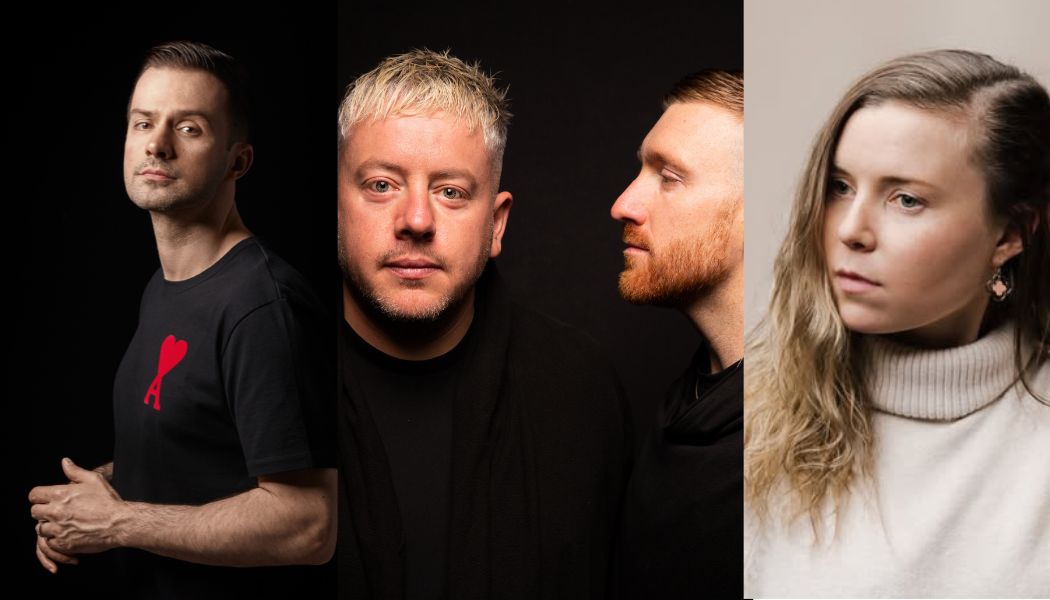



Melbourne’s electronic scene comes full circle as Dirty South links up with The Journey and vocalist Alverie for ‘Set Me Free’ — a collaboration rooted in shared history, studio instinct, and a mutual understanding of the dancefloor. From early breakthroughs and underground foundations to the evolving shape of the modern DJ, the trio reflect on their paths, process, and the moments that quietly define a career.
WWD: Let’s start at the beginning. Dirty South, you’ve been doing this since 2004 from bootlegs on a family computer to Grammy nominations. When you look back, what was the single turning point that made you believe this was actually going to work?
DS: It would be hard to pick one single moment that made me believe this was going to work. I think that it’s a combination of events, successful and also not so successful that led up to what this all is today. Maybe if I had to give one moment more gravity than the rest would be the early support from Pete Tong who helped broadcast my music to the masses outside of Australia. This helped a lot by having international labels, DJs and producer become interested in my music at the time.
WWD: Tom & Jacob, The Journey is a different kind of origin story. You came up through the Melbourne underground club and festival circuit. How do those roots still shape what you make and play today?
J: Back in the day, there was so much importance on playing to your set time, learning the flow of a club night, event or Festival. We learnt this from the more senior artists at the time and if we didn’t do this right, then you probably didn’t get another chance. We were consistently booked to warm up a lot of internationals and I think that really shapes you as a DJ. It’s easy to go out and play a banging peak time set, but I think the real rewards are in building a room or holding a room to keep the club open as long as possible. I feel like today this ideology is a bit lost these days. An event should have a bit of story to it, not just highlights from start to finish.
T: The landscape was pretty different when we were coming up. We really had to immerse ourselves in the scene to earn opportunities. It was about supporting the clubs and promoters you wanted to play for and slowly working your way into those rooms.
DJs also weren’t really superstars back then, so the ceiling of what you could imagine was quite different. There weren’t Dom Dolla’s or Fisher’s selling out stadiums, so our roots were very much about the craft of DJing, building and holding a dancefloor over a few hours rather than building a brand.
The industry has obviously evolved a lot since then, which is exciting, and we’re learning to evolve with it too. The art form is a lot more multidimensional now. It’s not just about the music, it’s a full show and experience and the next generation are incredibly clever with how they market themselves and connect with audiences.
The one thing that has probably changed is that DJs don’t always get as many chances to play those really long sets anymore, which were always such a fun way to experiment and take people on a journey. So in many ways it’s just a different landscape now, and it’s exciting to see how the culture keeps evolving.
WWD: ‘Set Me Free’ feels like such a natural, organic collaboration – can you walk us through how this single came to life? Was there a specific moment, emotion, or idea that sparked it, and how did the three of you find your way to each other for this one?
DS: We spoke of collaborating at some point and it made sense since we all live in Melbourne. Tom and Jacob already had a sketch idea with a rough demo vocal and I thought this would be a great start. We reworked the music from scratch and built the demo vocal around the new music. I felt like we are both in a similar space musically right now so it all came pretty naturally. Once we were happy with the music, Sabrina came into the studio and re-recorded the vocals and voila!
T: Sabrina and I write a lot together, and without giving too much away, we originally set out with a completely different direction for a record that was in another lane entirely. Around that time I was in the studio with Dirty South and we were sharing a few things we’d been working on, and that idea came up.
We ended up using a few sections from the original vocal and building something new around it. In one of the sessions we had most of the arrangement down, but I had to leave while we were still working on the breakdown. Later that night, sometime after midnight, he sent through a version and it honestly sounded like something out of a movie. He really went to another dimension with it that day.
WWD: And on the vocal side, how did that process unfold? Was the direction for the vocals clear from the start, or did it evolve as the track developed?
S: A bit of both…the vocals, lyrics and melody all came to light sitting at the piano. It felt a bit like writing a story, and the chords fit effortlessly around it. There is a dreaminess to the vocals that Dirty South and The Journey really brought out with the development of the track. The track grew into this infectious groove that really carries the storyline and takes you on a journey. It gave the vocals a home.
WWD: Dirty South, you’ve collaborated with everyone from David Guetta and Axwell to Sebastian Ingrosso and Alesso. What’s the difference between a collaboration that becomes a classic and one that just becomes a release?
DS: You never really know what will become a classic or not. To give you an example, my remix with Axwell of ‘Sweet Disposition’ received a Grammy nomination and ended up being quite a fan favourite over the years, but when we first played it, that wasn’t the initial reaction. The band also wasn’t too keen on releasing it on first listen, until it leaked to a few DJ’s and the fans discovered it through Youtube clips. After that it took off on its own and the rest is history as they say. I think the most important thing is to be excited in the studio while making the music. I have to be excited before anyone else. Once the music is released, it’s out of my control what happens to it.
WWD: The Journey, your UGENIUS Radio show has been running strong and recently featured Dirty South’s track ‘In Bloom.’ How do you think about curation, what makes a record worthy of the UGENIUS platform?
T: The show is really centred around brand new music, so that makes things pretty easy in a way. We are lucky enough to have quite a lot of music shared with us before it is released to the world so every week I’ll go through what records are coming out in the next few weeks and curate a show. We like to support as much Australian music as possible but ultimately if it fits our sets, we will consider it for the radio show.
WWD: Alverie, songwriting for dance music is its own craft – you have very little time to communicate something emotionally before the drop pulls focus. How do you approach a vocal when the track has that kind of architecture?
S: At least for me, I think that things are better communicated through music…vocals hold their own story and emotion, so when you work with superbly clever people you don’t need to say too much!
WWD: Dirty South, you’ve evolved significantly over the years from electro house to progressive house to your darker, more introspective albums like ‘Darko.’ Is there a version of your sound you haven’t fully explored yet?
DS: I try not to think about the specific genres and overthink the creative process. For me it’s important to be in the studio and explore. I like listening to a lot of music and whatever inspires me usually guides me subconsciously to what ideas come out in the studio.
WWD: For The Journey and Alverie, what does the Australian music scene need more of right now?
J: The electronic music scene in particular in Australia is stronger than ever right now, which is super exciting. There’s a real opportunity for the Government to build on that momentum and increase support for emerging artists in this space. Electronic music already commands a significant share of radio airtime, and it’s clearly where a huge number of young people are listening and aspiring to create. It would be great to see that reflected in how the industry is recognised and funded, because at this point, it’s far more than a sub-genre. It plays a major part in Australian music culture.
S: I have been very fortunate to experience a strong sense of community through collaboration and mentorship, as well as safety in expressing creativity. It makes me so happy and proud to see Aussie artists being allies to fellow Aussie artists regardless of age, experience, or genre. I think we still need more of it, now more than ever!
WWD: Last question, for someone who’s never heard any of you before and is about to press play for the first time, what’s the one track each of you would send them to?
DS: Today I would say ‘Corda;…tomorrow might be a different answer!
T: Today I would chuck ‘Set Me Free’ on, out now on all platforms!
S: I’d need to make a playlist…
WWD: Great choices! Thanks for the chat, everyone 🙂
‘Set Me Free’ is available here