For more than two decades, Sean McCabe has carved out a distinctive place in soulful dance music, balancing deep-rooted influences with a restless curiosity that keeps his sound evolving.
From his work as a DJ and producer to the growth of Good Vibrations from a Bristol party into a respected label, his approach has always centred on musicianship, groove, and genuine connection.
As Good Vibrations celebrates ten years with ‘Decade One,’ McCabe reflects on the sounds, people and places that have shaped his journey – and why, after all these years, the creative process still matters most.
WWD: What do you feel has stayed constant in your sound since releasing your first tracks in 2003, and what has evolved the most over that time?
I think my style of arranging has stayed quite constant. I have always liked building somewhere and creating changes throughout a track. And it has evolved in a way where the music I am enjoying is a bit deeper, eclectic, and musical with richer chords and more organic textures. So that reflects in the range of music I am producing now.
WWD: What does soulful mean to you when you think about dance music today?
To me, it means dance music that is rooted in classic soul, jazz, gospel, and funk foundations, like the types of chords, scales, and bassline notes used, how they are played with a more syncopated rhythmic timing, usually with electronic elements. I think musicianship, great vocalists, and songwriters are still a really important part of what gives it that feel. So it is that combined with the dance element, so the beats are equally important. Usually I look for a type of swing or syncopation and organic sounds in the beats. Something that gives it a groove to make you move.
WWD: Your productions move through house disco boogie Afro deeper grooves proto house and nineties garage house dubs. What draws you to working across such a wide palette of styles?
I have always played like this as a DJ, so it always felt important to me to represent the same range as a producer. Mainly because I get bored making the same style, so it keeps it interesting for me and allows room to grow and learn. Secondly, it also means when people hear me DJ, they can expect a similar range in the sets. So it is not a surprise.
WWD: How do your love of vintage synthesizers and eighties soul shape the way you approach your studio work now?
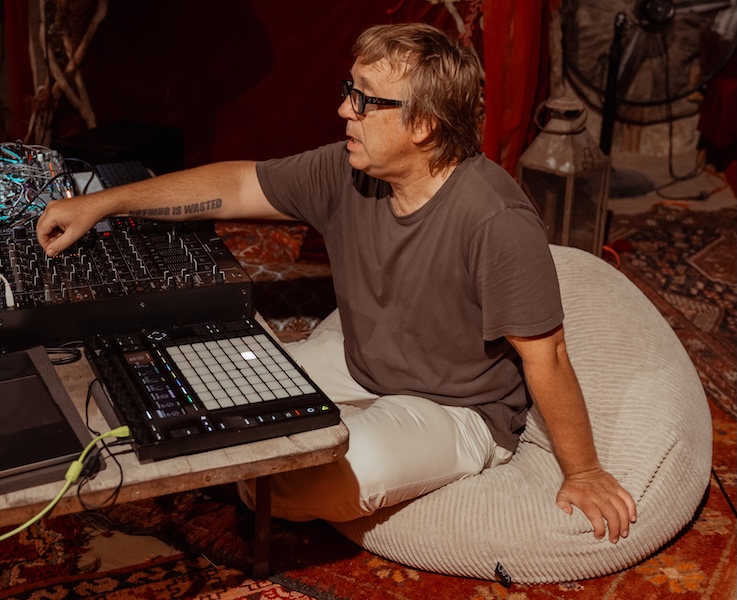
It has made a huge difference to the process. When I started collecting outboard synths around 2007, gradually it made finding sounds I liked much easier. A few of them did not have MIDI so everything had to be played live, which helped with the playing too. Playing live gave elements of the tracks a looser feel and removed the temptation to quantize the notes. Nowadays a lot of the plugins have really improved in choice of sounds, and this makes it easier to write arrangements before committing to a sound. But I still prefer working hands-on with equipment. It is quicker to get inspired, capture ideas and also find those sounds that give a track the icing on the cake.
WWD: You have remixed artists from Dennis Ferrer to Evelyn Champagne King. What is your philosophy when you take on a remix for someone iconic?
I try not to think of the person as being iconic when working on it. That can make you lose perspective and add too much pressure. I just focus on the song, the feeling it invokes and the message. Then my approach is to imagine I am creating the original version and what vibe would complement the song.
WWD: Across your discography what recent shift or experiment has felt the most exciting for you creatively?
I think working on the Harold Matthews Jr album project was really exciting because of the range of styles we were doing and then piecing it all together in a way that made sense.
WWD: You have said you prefer smaller intimate rooms over huge clubs. What makes those spaces more meaningful for you?
I just think it suits soulful music more and I can play the things I really like, and what helps is the dryer acoustics of a small space and the connection with the audience. Plus I am not a fan of being very visible in the spotlight where everyone is watching me. That feels strange. I am way more comfortable in low level dark DJ booths where everyone is focused on the music, the sound system and the dancefloor, rather than a spectacle on brightly lit big stages with cameras out.
WWD: From Asia to South Africa how have international crowds shaped your understanding of soulful dance music?
Well to me South Africa is one of the best places on the planet to go for house music of the deep and soulful kind. Just because of how much they appreciate it there which allows me to be uncompromising when DJing there. Coming home from there gives me inspiration for the music I want to create and even how I play at local events in Bristol.
WWD: Good Vibrations began as Bristol all dayers before becoming a label. What was the moment you realised it needed to evolve into an imprint?
It did start as an event yes, which is still running now where I play alongside my friend and local Bristol legend Deli G. Moving to the label felt natural, as I was looking for some creative freedom, and using a brand I had already established meant one side would help the other side of Good Vibrations.
WWD: You have released music from Black Sonix, Hannah Khemoh, Mike City, Lem Springsteen, Harold Matthews Jr, and remixes from Louie Vega, Jovonn IG, Culture and others. What guides your choices when curating the catalogue?
Mostly the projects I get involved with are with or through friends of mine, people I have connected with over the years on a creative level. It is very rarely planning. I prefer to let things happen organically. For example, the IG Culture remix came about because he was feeling Frankie’s mix and he did his own bruk edit. He sent me the edit and at the same time we were doing the Re Vibrations compilation, so I asked if he would like to do an official remix of the song. Because he was already into it, it made sense to let him do his thing.
WWD: How has the Bristol scene shaped the identity of Good Vibrations over the past decade?
People have shaped the identity rather than a place. Some of those people are South West and Wales-based, like Deli G, Black Sonix and Ellis Aaron. And our local party definitely has an influence on my sound on the label, as a lot of the time I like to make things that I can play at the event. But I like to think the label output and party is playing a small part in putting Bristol on the map for that particular sound. It is one of the reasons I try to keep our events exclusive to Bristol. I want to give people a reason to visit and check out our vibe.
WD: What was the biggest challenge in selecting tracks for ‘Decade One?’
It was not too challenging, as I have had most of the tracks in mind for a while. It really started from having a list of things I wanted to press on vinyl at some point. I have been doing a Various Artist EP as Good Vibrations Volumes once a year, which has included past material. So when I realised it was coming up to ten years, I thought I could do something like a bumper edition of that. And it was an opportunity to look across the last ten years and pick the things I have really liked and wanted to exist physically. The only challenge was giving it a variety of flavours, so not too many similar vibes.
WWD: Looking back over ten years of Good Vibrations, what moment stands out as a turning point for the label?
When Louie Vega did his take of I Wonder, it really helped to establish what we were about to a wider audience who took notice. And it was our first vinyl release which was definitely a big turning point. There is something about releasing things physically that makes you feel more like a real record label.
WWD: What do you hope Decade One communicates to long time fans and to newcomers discovering the label for the first time?
I think it is a decent representation of our sound. I would like it to give people a taste of the different vibes we have represented over the last ten years and a preview of some great songs and tracks on the label.
WWD: With the anniversary and your ongoing productions, where do you feel your sound is heading next?
Honestly, I am not sure. I have never planned ahead too far. I just want to carry on enjoying the process, being creative, authentic to how I am feeling at the time, wherever that leads me. It is kind of like a ritual I guess, rather than a mission or goal.
WWD: If you had to define your mission for the next decade of Sean McCabe and Good Vibrations what would it be?
Just to continue representing a wide range of the deeper and soulful side of dance music to the highest quality I can.
WWD: Wise words! Thanks for the chat 🙂
Thanks When We Dip!
‘Decades One’ is available here.