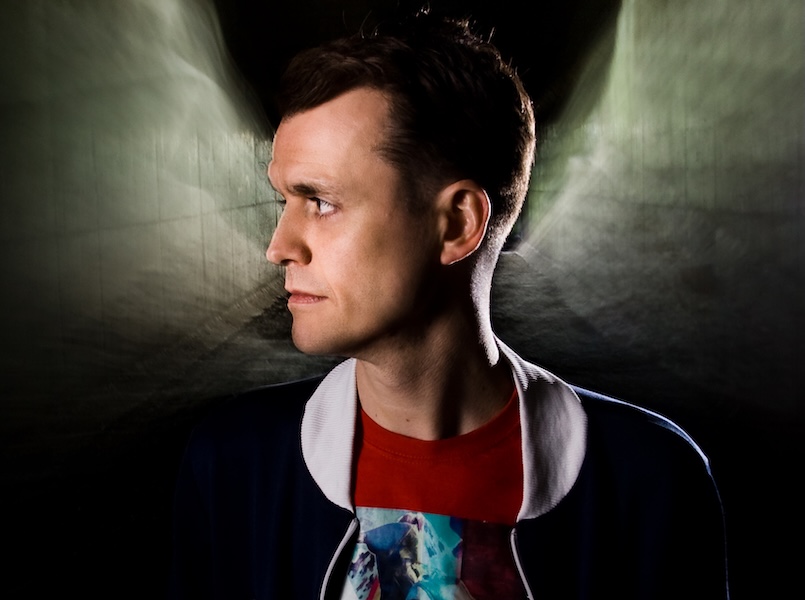
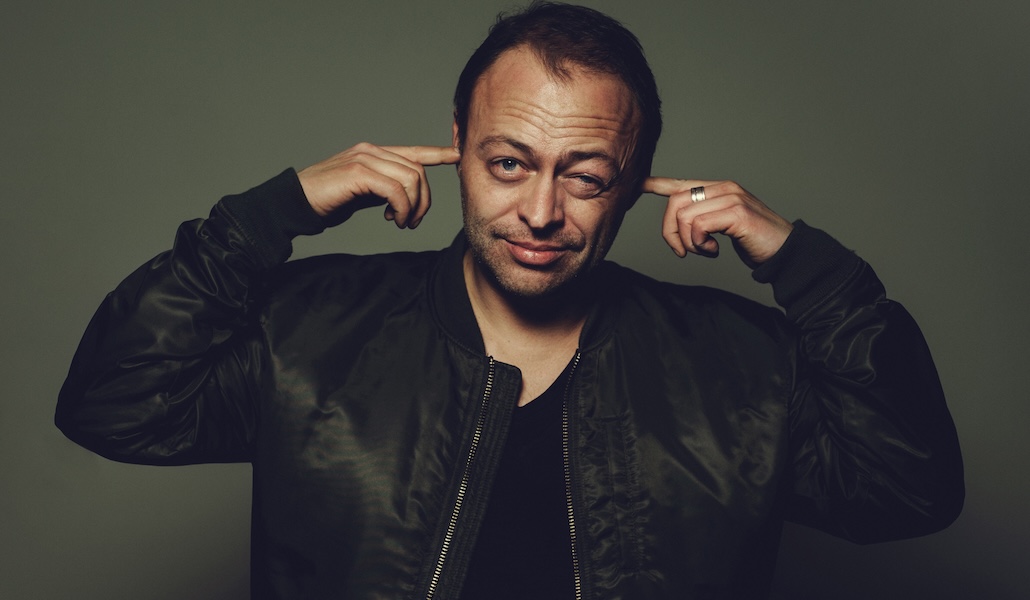
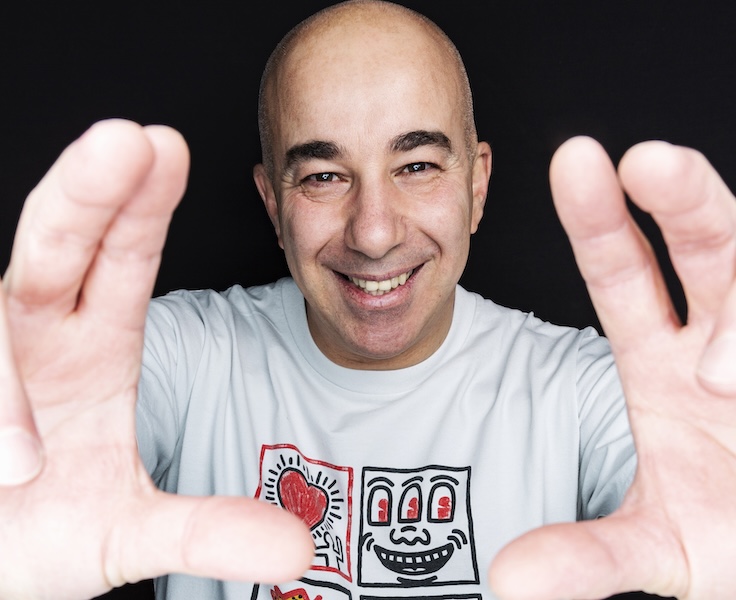

For nearly two decades, Jamie Boyer has been quietly building an expansive world of electronic music under the Russian Linesman alias. Based in Nottingham, his latest and most ambitious project, ‘Remember When We Were Thriving,’ brings together 14 deeply introspective tracks shaped by memory, identity, nostalgia, and the psychology of change.
Described by Boyer as an attempt to understand himself through music, the album draws on everything from folk and shoegaze to ambient, electronica and the experimental spirit of James Holden, while his famously unconventional “digital sarcophagus” process turns fragments of everyday life into something entirely new.
We caught up with Boyer to dig into the story behind the album, his journey from acoustic musician to electronic producer, the psychology woven into his work and what lies ahead for Russian Linesman.
WWD: Nice to meet you Jamie! Or would you prefer Russian Linesman, RL, Lino, Liney or something else?
It was a secret alias for a long time but as the years have gone on that has slowly unravelled. So Jamie is great, although some of my friends do actually call me Lino.
WWD: Where are you right now and what have you been up to today?
I‘m training as a Transactional Analysis Psychotherapist and today I have been working one to one with sixth form students at a college. It’s incredibly rewarding and I absolutely love it. I get to offer something I wish had been available to me when I was navigating my own teenage years. I am back home now sat in my studio in Nottingham.
WWD: Can you tell us a little bit about the overall concept behind ‘Remember When We Were Thriving?’
I wrote an article for the British Psychological Society recently where I said “I thought I was making conceptual electronic music. I now suspect I was actually trying to understand myself.” That probably sums the album up better than anything. I became fascinated by psychiatrist Eric Berne’s ideas around our old scripts, autonomy and the parts of ourselves we carry from childhood. Those ideas started finding their way into the record. The album grew slowly over a number of years from fragments, memories, observations and half-forgotten ideas. Looking back, I think it became an attempt to understand change, uncertainty and the stories we tell ourselves about who we are. It is not really a psychology album. It is much more personal than that. I think I just now understand why I have been making this kind of music for twenty years. I am really happy with how it turned out and the reception has been positive, so go and listen to it!
WWD: You describe your unique production process as a digital sarcophagus. Can you explain to our readers just what this means?
I collect fragments. Bits of conversations, field recordings, old pianos, guitars, samples, sounds from places I have been, people I have met and things I have read or watched. Often, they have been sitting around for years in my archive without me knowing what they are for. I then build the track around these pieces and seal them inside it. That is the digital sarcophagus. The original moment disappears but a little piece of them survives inside the music.
WWD: We understand that before 2006, you were an acoustic musician. Can you tell us a little more about that?
I was enamoured by folk music. I played at the Nick Drake Gathering, toured Germany and contributed to an Elliott Smith tribute album. I loved writing and got a buzz from performing but I was never completely comfortable being on stage playing guitar and singing. The precision of Nick Drake’s playing frustrated me, so I turned to the dark arts of electronics to try and emulate his octopus fingers. I still write all of my music on guitar though. That is usually where a Russian Linesman track begins. Then it goes into the sarcophagus.
WWD: Was it a gradual move to becoming an electronic producer, or was it a rapid sea change?
Hearing James Holden “Horizons” and “I Have Put Out The Light” was a real turning point. I started researching how he made those songs and discovered he was using Jeskola Buzz, so I downloaded it and disappeared down the rabbit hole. James and I spoke a lot during this period and he was very helpful explaining his process. Buzz is an old modular DAW. It is ugly, difficult to work with and has a habit of making you work incredibly hard for things other software would probably do in seconds but that became part of why I loved it. It constantly sent me down unexpected creative pathways. Twenty years later I am still using it, so that rabbit hole turned out to be a fairly deep one and I am still exploring it.
WWD: What musicians or music styles have been your inspiration and what genre, if any, would you describe your productions as?
Grunge, folk music, shoegaze, ambient and electronica. Sonic Youth, Nirvana, Nick Drake, Elliott Smith, James Holden, Boards of Canada, Sigur Rós, My Bloody Valentine, M83, Stumbleine, Sasha and Digweed and Angelo Badalamenti have all found their way in there somewhere. I find genre quite difficult though. What I really want is to feel frisson when I write something. Sometimes I do. Sometimes it is all just fuzzy electronica.
WWD: We’ve tapped into your back catalogue, your music definitely gives us a calm focus, like a kind of wonderful sonic adaptogen. Are there other artists you’d recommend to give us the same kind of fix?
Definitely some of the artists I mentioned in the previous question but recently I have been listening to a lot of Youandewan, Tambores En Benirras and Yanamaste. I am always looking for music that gives me that feeling rather than worrying too much about what genre it belongs to. That’s probably why I also hammer Lil Peep, Juice WRLD and Queen.
WWD: What do you have planned for the rest of the year? Back in the studio, any gigs we should know about?
I have been obsessed with the Faroe Islands since I was about 10. It is my favourite place in the world to visit, beautiful landscapes, warm people, cold weather and exquisitely remote. I have been working on an album inspired by the island for sixteen years now. I am starting to wonder if I will ever actually finish it, let alone release it. Alongside that I have been working on the Russian Linesman archive. Cataloguing every song I have ever made. There are literally thousands of unreleased tracks in there, which is slightly terrifying but has been fun to compile. My next proper Russian Linesman album is already well underway. A different sound seems to be emerging. Less dancefloor and even more fuzzy. I am quite happy following wherever that goes.
WWD: Sounds amazing! Thanks for the chat 🙂
The ‘Remember When We Were Thriving’ album is available here