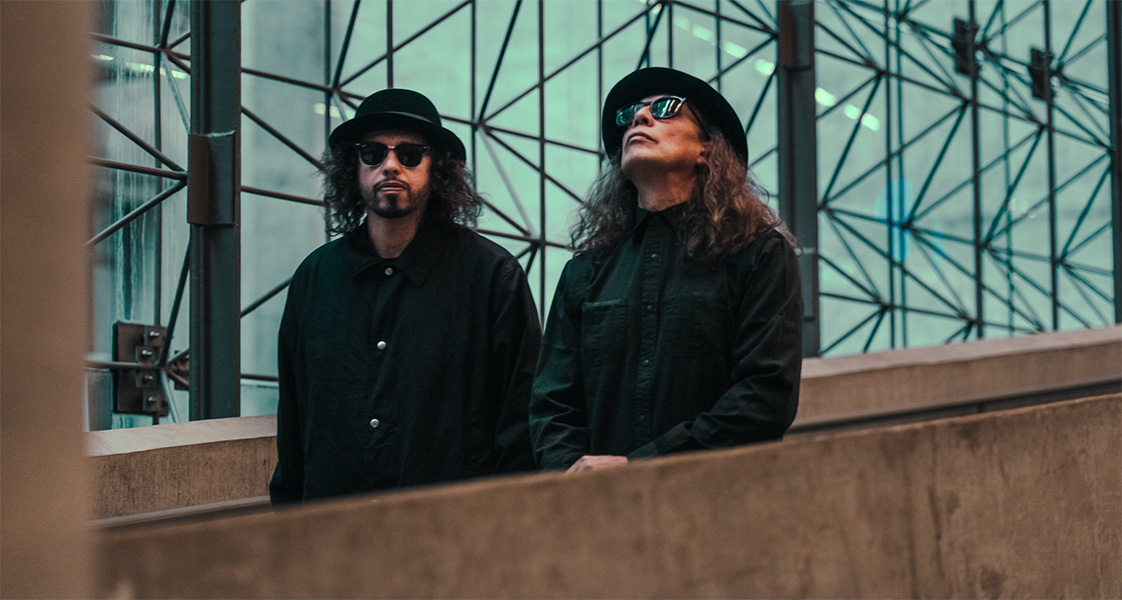
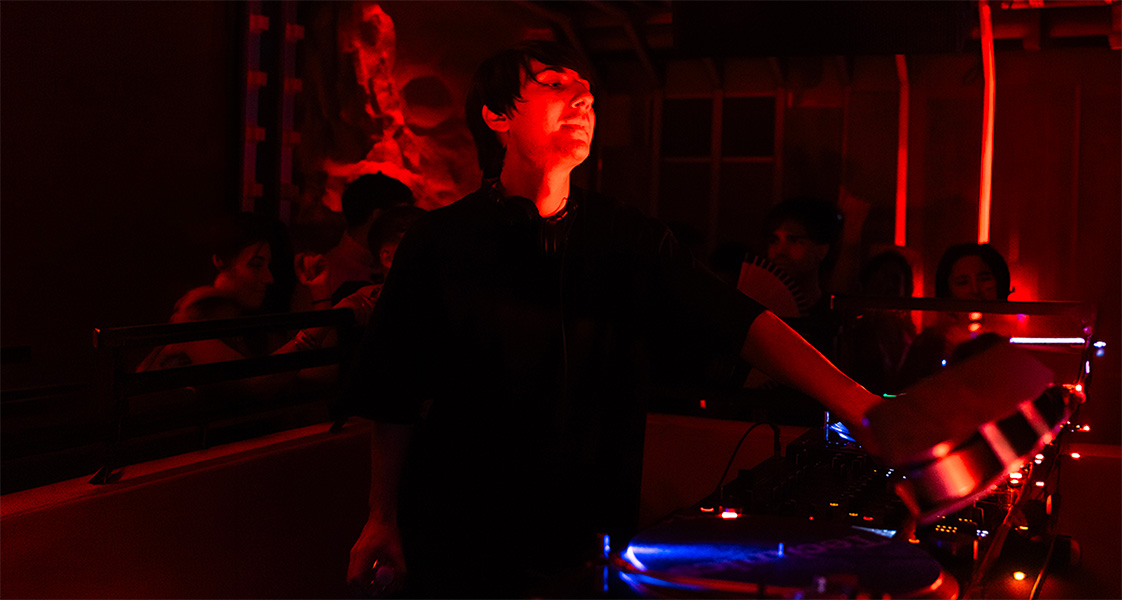

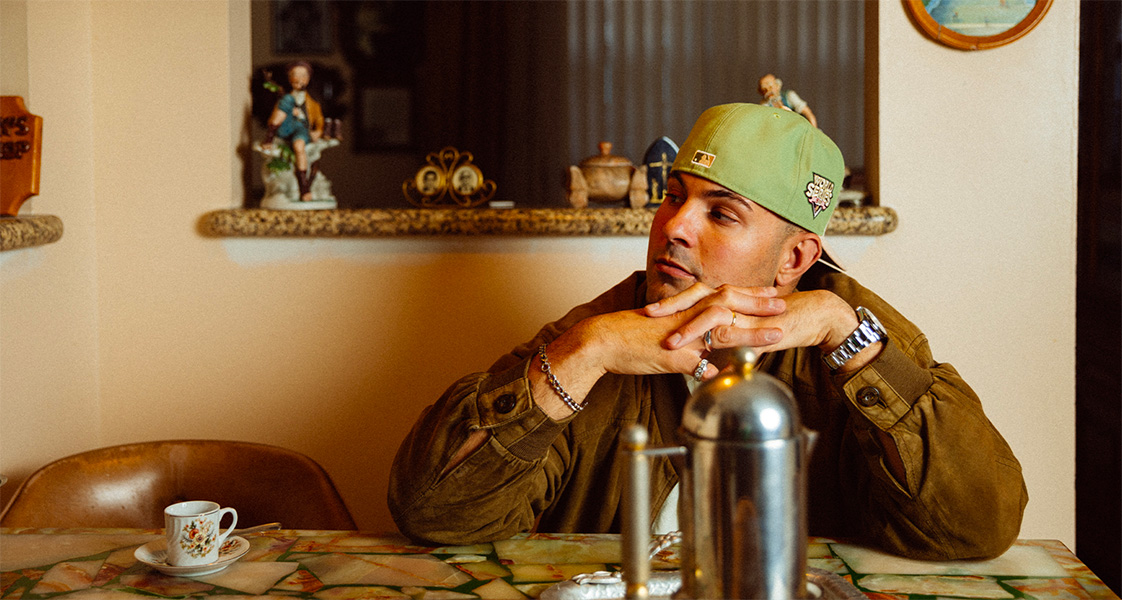
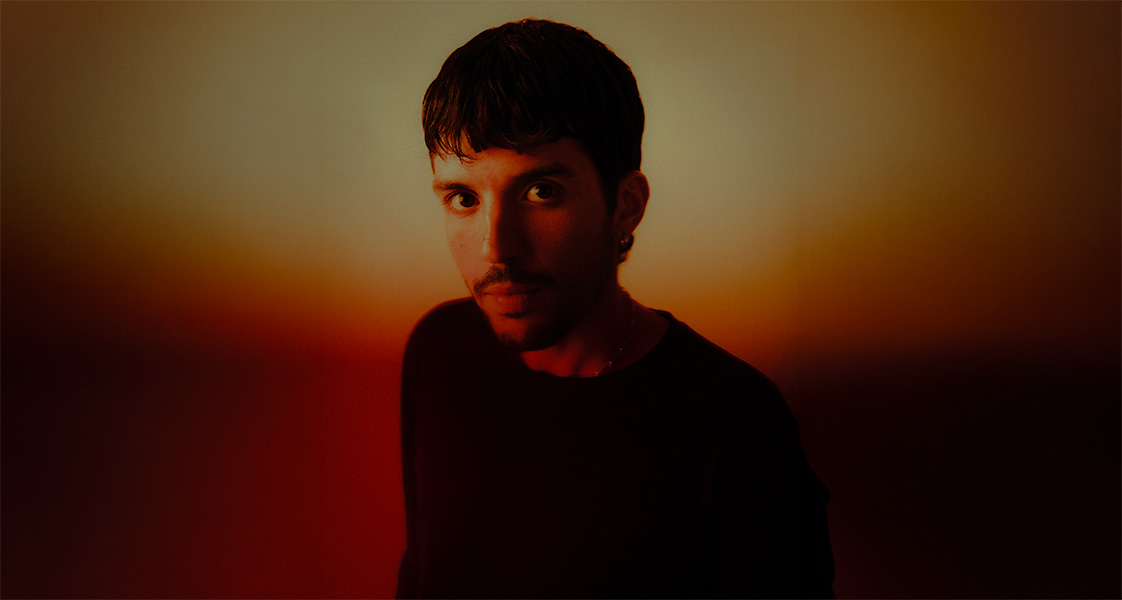
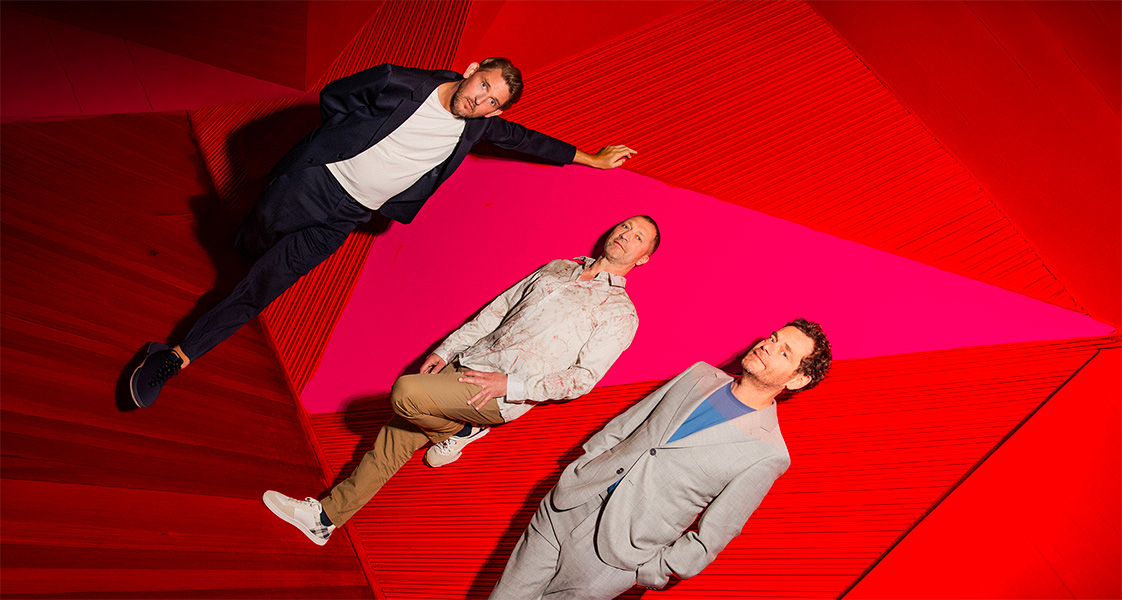
Ubaruh is the sound of two decades of friendship erupting into something wild, percussive, and joyfully unrestrained. Born from a playful studio experiment during the pandemic, the duo’s debut album ‘Hey, Ubaruh!’ channels psychedelic dancefloor energy, Brazilian rhythmic chaos, and global club influences into a universe entirely their own.
With real instruments, hypnotic grooves, and a fearless sense of fun, Ubaruh craft tracks that feel like postcards from parallel dance floors. In this conversation, they open up about their creative chemistry, their love of organic sound and the unexpected journey that shaped their first full-length record.
WWD: Your name comes from O Barulho, “the noise”. What noise first defined the spirit of Ubaruh, and how has that evolved into the sound we hear on the album?
We originally came up with the name as a noise in itself, a mantric, percussive, tribal vocal call: “Hey, Ubaruh!” Only afterward did we realize it resembled the Portuguese word for “noise,” barulho. We loved that phonetic and semantic overlap, so we embraced it.
WWD: Phillipi comes from Fatnotronic/DEEWEE, Emmo from Monterno/Bamba Music. How do your different musical worlds collide, and where do they naturally align?
We’ve been friends for more than 25 years, dating back to the peak of São Paulo’s rave-club electronic scene. In the 2000s, we produced house tracks together for fun, sampling hip-hop and R&B, though none were ever released. During the pandemic, when Phillipi had no gigs, Emmo invited him to the studio to experiment. We began remixing artists like Kraak & Smaak, Rita Lee, Little Animal, and Gohu, and eventually decided to create original material from scratch. The results felt powerful and inventive, leading to singles and now our album Hey, Ubaruh! on Partyfine.
WWD: You’ve known each other for years. What’s something about your dynamic that listeners would never guess from the music alone?
We come from different backgrounds and have a ten-year age gap, which could suggest a generational divide, but it never has. There’s a natural balance between Emmo’s musicianship and Phillipi’s DJ-researcher mindset.
WWD: Your music blends fat basslines, hypnotic guitars, heavy percussion, acid synths, and Balearic warmth. What element usually sparks a track for you?
There’s always a new instrument in the studio that kicks things off, a drum machine, synth, pedal, or guitar. Every song on the album began with a new piece of gear. Inspiration flows immediately, whether from a synth arpeggio or a compelling beat.
WWD: Brazil’s contemporary electronic scene is exploding with new ideas. What aspects of that scene feel most present in ‘Hey, Ubaruh!?’
Real percussion, without a doubt. We recorded extensively with Arlen Ribeiro, layering instruments across the album. The blend of styles, sometimes chaotic, is very Brazilian and very Ubaruh. Caribbean and Arabian influences also appear, alongside touches of pagode guitar grooves in tracks like “Pinche Funky Disco.”
WWD: The album is described as “psychedelic dancefloor alchemy.” What does psychedelic mean to you in a musical sense, texture, structure, emotion?
It’s an organic mix of timbres and styles with almost no boundaries, always anchored by a dancefloor pulse. There’s a playful nonsense in the lyrics, similar to the name Ubaruh itself. We include whatever feels cool in the moment.
WWD: The record leans heavily on real bass, guitar, and percussion. Why was it important to keep the music organic in an era dominated by digital production?
We leaned into Emmo’s background as a musician before becoming a producer. That sets us apart from acts that rely solely on samples or synths, and it becomes even more meaningful in our live performances.
WWD: Your sound moves between Brazilian, Caribbean, Balearic, and cosmic disco influences. Which places or scenes outside Brazil have shaped your musical worldview?
Phillipi has DJed around the world and brings fresh references to every session. We’re drawn to unusual, off-axis sounds and scales. Lately we’ve been listening to a lot of African and Arabian music.
WWD: The press release says each track feels like a postcard from a different corner of your universe. Which “postcard” was the hardest to capture?
The earliest tracks, ‘Pinche Funky Disco’, ‘Ubaruh Theme’, and ‘Baila-Dance’, took the longest. We tried to include every idea we had, which led to endless Pro Tools sessions. Eventually we developed a more streamlined process: start with the main beat, sometimes a chorus, then build the intro and outro.
WWD: What was the first idea or feeling that became the seed of the album?
The warm, enthusiastic feedback from Rita Lee after we finished our remix of ‘Banho de Espuma’. Her reaction gave us the psychedelic and percussive spark that shaped the Ubaruh vibe.
WWD: How did you approach sequencing the record so it moves from club hypnosis to open-air euphoria?
We structured the album with our live show in mind. The interplay of real instruments and vocals creates a natural progression from studio energy to live-set euphoria.
WWD: The vocals add a more emotional layer to each track. How did you decide when a track needed a voice?
Vocals have become essential to our process. We always feel a track needs a vocal line, it’s one of the pillars of the Ubaruh sound. It adds a pop-R&B touch that connects loops and beats into a complete song.
WWD: What was the most chaotic, funny, or magical moment during the making of the album?
Every spark of inspiration felt magical. We never worked under pressure, just two friends having fun. The songs evolved naturally, each with its own purpose.
WWD:P Partyfine has a strong identity and history. What does it mean to join a lineage that includes Frank Agrario, Dombrance, Fatnotronic, and Jean Tonique?
It’s a pleasure to have Partyfine believe in and support our music. We dream of performing alongside some of these incredible artists.
WWD: The label emphasises collaboration and independence. How did that environment shape the album?
Everything began spontaneously. We each maintain other projects, but when we work together, things flow effortlessly. We’ve already discussed collaborations for future tracks.
WWD: How does that philosophy resonate with your own approach to making dance music?
It’s at the core of Ubaruh, blending Emmo’s organic musicianship with Phillipi’s dancefloor-driven instincts. Collaboration with independence.
WWD: Your percussion feels alive and tactile. What’s your approach to building rhythmic layers?
Some layers emerge naturally; others come from experimentation. During a two-day session with Arlen Ribeiro, we recorded as many textures and instruments as possible. We often return to those recordings when building new tracks. We also processed percussion through ring modulators, bit crushers, flangers, and guitar pedals. Emmo even used percussive right-hand techniques on guitar to give the strings a tribal feel.
WWD: Do you start tracks together in the same room, or do ideas bounce between you remotely?
Most of Hey, Ubaruh! was created together in the studio from scratch. Some newer tracks, like ‘A Dream for So Long’ and ‘The 80’s’, began in Ableton’s Move groovebox before being finished in Ableton. Only the mixing process tends to happen remotely.
WWD: Any synths, pedals, or instruments that became essential characters on the album?
An SH-1 clone and the Arturia MicroFreak appear on nearly every track. We used many guitar pedals on vocals, synths, and percussion — including the Chase Bliss Mood, Boss MD-500, and Alesis Bitrman. Other synths like a 303 clone, Korg MS2000, Novation A-Station, Behringer Deepmind 6, K-2, and Model D were also heavily featured.
WWD: What emotional journey do you hope listeners experience when they play the album front to back?
A mix of emotions, mostly uplifting, playful, punchy, sexy, with a sense of detailed craftsmanship beneath the surface.
WWD: The album is described as bold and unafraid to experiment. What risks did you take that you’re proud of?
Singing, without question. Every track blends Emmo’s falsetto pop-R&B melodies with Phillipi’s lower, more spoken-style vocals. The contrast has become a defining part of our sound.
WWD: How do you balance being part of a global electronic community while staying rooted in your own identity?
We don’t believe in geographical boundaries. We’re all on the same planet, and every cultural spark should be accessible to everyone. Music is global — house, techno, Brazilian funk, whatever. We love both new and vintage electronic technology, as well as organic instrumentation.
WWD: How will ‘Hey, Ubaruh!’ reshape your live sets? More instruments? More improvisation?
We’ll have a wide range of live instruments on stage, and we hope to incorporate improvisation based on the crowd’s energy. We may even add classics, choruses, or recognizable guitar riffs.
WWD: What’s the next frontier for Ubaruh after this album, collaborations, remixes, touring, something unexpected?
Our biggest dream is to bring our live show to the stage and perform these songs with live vocals, guitar, bass, and percussion. We love doing remixes and hope more opportunities come our way. We also have a shortlist of artists we’d love to collaborate with once we return to the studio. Maybe even some live features on stage — who knows.
WWD: All sounds amazing! Thanks for the chat 🙂
Thanks a lot!
The ‘Hey Ubaruh!’ album is available here.