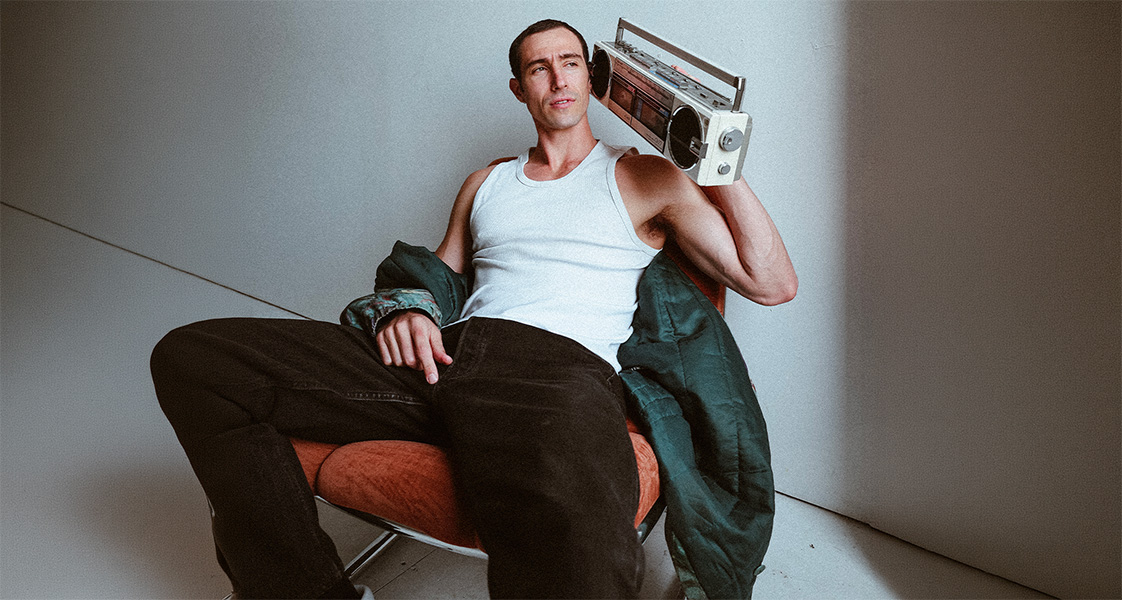
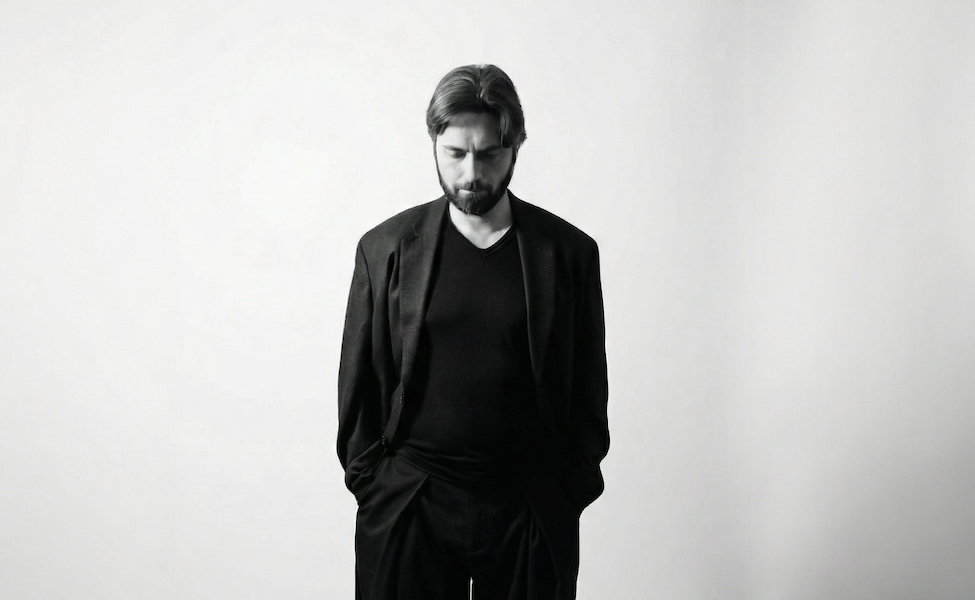
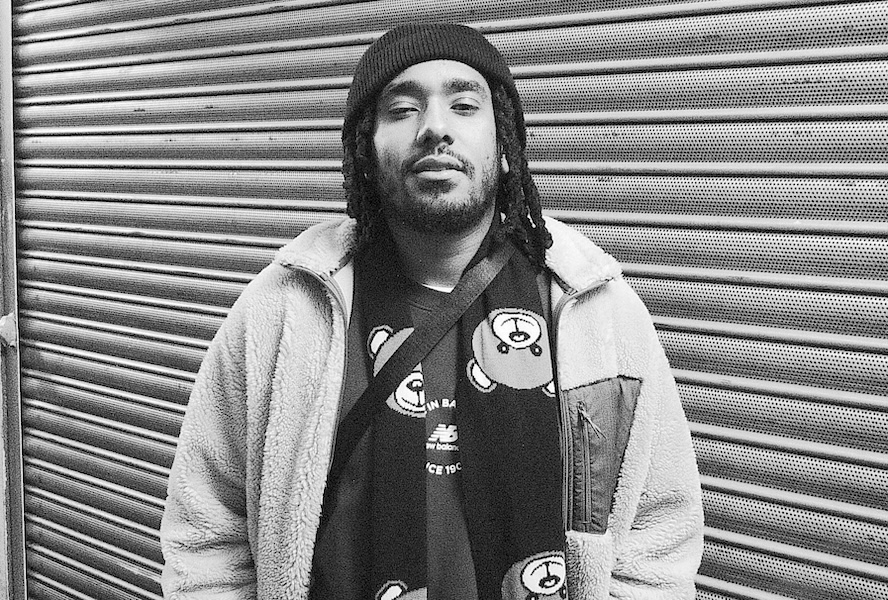
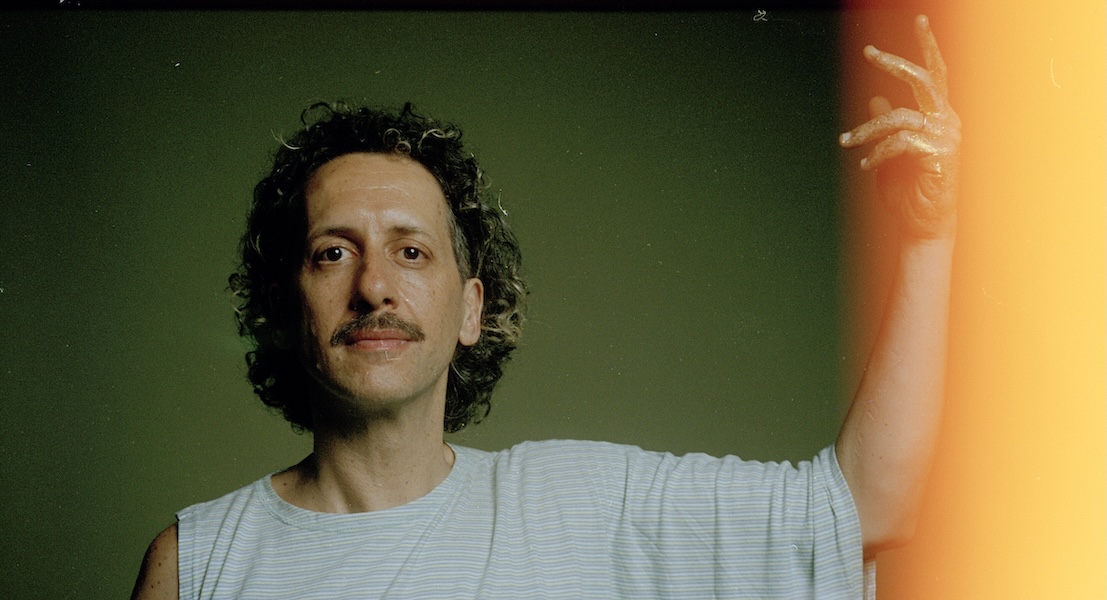
James Juke has become one of New York’s most trusted ears on the dancefloor – a DJ, curator, and scholar whose sets bridge the soulful lineage of house with the restless energy of the city he now calls home. Raised in San Francisco and sharpened in Brooklyn’s underground, he brings a rare blend of deep musical knowledge and dancer-level intuition. With a new remix package on Toucan Sounds and a growing reputation for shaping community-minded spaces, Juke is entering a moment of clarity, confidence, and creative expansion.
WWD: You grew up in San Francisco and now shape dancefloors in Brooklyn. How have those two cities influenced your identity as a DJ, curator, and scholar of house music?
They are both quite multicultural and have distinct musical histories that I’ve learned from. In San Francisco, I witnessed a city that was at one point full of artists become transformed into a tech monoculture. SF has an interesting history of house music that I’ve only learned about in recent years. I was never really exposed to it growing up because no one in my nucleus was a part of it. Conversations with Homero Espinosa and brief encounters with Mark Farina and Doc Martin have informed and enriched my knowledge of SF’s rich dance music history. I’ve been lucky to experience pockets of creativity that still exist in the underground. I think back to Afrobeats parties at Spirithaus in West Oakland and Ge-ology spinning 45s at a warehouse the night before the shelter-in-place order in March ’20. Shortly before moving to NY, I attended the first Bar Part Time pop-up parties at Mercury Cafe in SF, which felt so exciting and joyful.
When I moved to Brooklyn, I knew I’d discover an even wider variety of sounds and musical cultures. On one of my first weekends, I spent Friday at Unter, Saturday at Nightmoves, and Sunday at Soul Summit in Fort Greene. I was hearing experimental techno, rare disco, and soulful house almost every weekend. Maybe it’s no wonder that after a year of this, I was feeling a little lost. I was in the process of trying to digest this amalgamation of styles and interpret them in my own way. When I eventually move back to San Francisco, I look forward to discovering—and hopefully shaping—the current manifestation of the dance music community.
WWD: Your sets balance nostalgia with forward motion. How do you decide which elements of disco, jazz, soul, and classic house to carry forward, and which to reinvent?
Good question! I’ve always been attracted to music with vocals, jazzy chords, catchy melodies, and live elements. I love finding ways to marry all those elements with hard-hitting basslines and heavy drums. The juxtaposition often works very well (artists have been experimenting with this since the 80s), but I think there’s still room to push the boundaries and find new ways to combine forward-looking “tech” sounds with real instrumentation and musical elements. It’s something I’m seeking to do with much of my upcoming music.
WWD: You’re described as having “scholar-level knowledge and dancer-level intuition.” How do those two sides of you meet when you’re behind the decks?
The way I think about it is that sometimes DJs can become a bit elitist and snobby about showcasing their “knowledge” of underground music or think too much about technical perfection at the expense of being in connection with the dancers and taking risks. As someone who spends a lot of time on a variety of dance floors, I’ve become attuned to how different DJs handle their relationship to the crowd. I always try to transmit a defined subjectivity in my sets without forgetting about the enjoyment of the dancers.
WWD: Your quarterly party series has become a destination for dancers and DJs. What was the original intention behind The Jukeboxx, and how has it evolved?
I’ve always appreciated a well-curated night and felt I’d be able to offer something distinct with The Jukeboxx. Over the last few years, I’ve been able to book a bunch of artists that I admire, including Dee Diggs, Devoye, Cosmo, Kim Anh, Lovie, MomaReady, and Rimarkable—all artists that know their sh*t and have unique styles and tastes that come through every time they play. I hosted a majority of them at Bossa Nova Civic Club, a dark, sweaty room known for late nights and hard-hitting music. With The Jukeboxx, I’ve wanted to add a little more soul and classic house than you might find on a typical night at Bossa.
WWD: You’re known for creating spaces that feel both deeply informed and deeply joyful. What does community mean to you in the context of house culture?
Community is everything! You don’t create a healthy dance-music culture without it. House has always been about collective healing, spiritual release, and self-expression. The best dance floors offer an inviting space to be yourself, feel connected to others, and maybe even make some friends. Beyond this context, I love the community that exists among other DJs, producers, and people who frequent parties. There’s a shared desire to shape the scene for the better and, aside from some unfortunate gatekeeping, uplift one another.
WWD: What guides your decisions when curating lineups or shaping the arc of a night?
I enjoy trying to open people’s minds to music they may not be expecting or have maybe not experienced before. I recall the night when I booked Lovie to play at Bossa Nova; she was playing a ton of dope jazz-fusion, soul, and disco—genres you almost never hear there. I thought it sounded great, and Devoye, who stopped by, remarked that he was super happy to hear that music at Bossa. I selfishly also just love to book artists that I really like going to see. Part of my motivation to book someone is having enjoyed one of their sets when I’m out and about.
WWD: What inspired you to open your originals up to reinterpretation for this new remix package on Toucan Sounds?
I’ve done a ton of remixes but had never had anyone remix my music. As this was my first proper EP, it felt like an appropriate opportunity to finally have some friends and peers of mine put their spin on my tracks. I’m grateful I did and am excited to think about future opportunities to do so.
WWD: Supertaste, KITTY CA$H, Love Language, Cakes Da Killa, Wuhryn Dumas… it’s an eclectic cast. What drew you to each of these artists?
I wanted to include artists that represent different parts of the dance-music world. I’ve always been intrigued by artists that have mainstream appeal without “selling out” or appealing to the least common denominator. All of these artists have been quite successful in different lanes and have an uncompromising style and sound. Cakes Da Killa has created a singular lane of house- and club-influenced rap music that’s gotten the attention of the music industry’s elite. Wuhryn Dumas, who I met through Cakes, is a rising star who can lay down incredible vocals just as well as deliver a jaw-dropping live performance. Kitty Ca$h, often on tour with Kaytranada (one of my first musical heroes), is bearing the torch for house-tinged club music heavily influenced by hip-hop, R&B, and a variety of international genres. Love Language are trailblazing a fresh take on dance-pop, crafting expertly made club tracks with plenty of range. Supertaste are defining a modern disco sound equally at home on a 10,000-person festival stage and in a 100-cap room.
WWD: What surprised you most when you first heard these remixes come back?
Honestly, I can sometimes be a little precious about my own music and had no idea what to expect. Even so, I knew the stems were in good hands, so I wasn’t surprised at all to hear three awesome interpretations of the original. I like them all in different ways, but I’d say I was most shook by Supertaste’s acid-disco take on “Haters & Congratulators.” It was the most distinct from the original—which sometimes falls flat, IMHO—but somehow works really well.
WWD: ‘A Little Lost (Deluxxe)’ — this track feels like a statement piece. What does it represent for you creatively and culturally?
Re: the EP, it’s the first time I created music with the intention of it being both for listening and for the club. I’ve been inspired by artists like Makèz—top-notch producers who seamlessly float between a highly musical, listenable style and one more suited for a big system with a room full of dancers. As someone who’s always loved vocal performances in dance music, I wanted to organize a project around these collaborations. I certainly did hope that this project felt like a statement too. For a while I became pretty associated with a disco-house sound, and I hope this project shows people that I have a lot of range that extends beyond many of my releases from 2022–2024.
WWD: When you’re in the booth, what tells you you’re in the right place — that the room is locked in?
Most importantly, I see people actually movin’ and groovin’; there’s no greater compliment. I also really love a good holler. Inevitably there will be some conversations, but I hope I see most people engaged with the music when I look up. I’m really not a fan of phones either. On a bigger stage, sometimes it feels validating to see people film the highest-energy moments, but I’d still prefer to see people locked into the moment.
WWD: You move fluidly between intimate rooms and massive stages. How does your approach shift between those environments?
It definitely shifts a bit. Frankly, there are some songs that work really well in a dark 100-person room that fall a little flat in a 3,000-person venue—and vice versa. Even so, as I’ve gotten better and grown more confident as a DJ, I’ve learned to find the balance between “playing to the room” and delivering an authentic, uncompromising James Juke set. I like to play disco as much as hard-hitting house. In the same set I want to play soulful house and hypnotic early-2000s UK tech house. Increasingly, I’m finding ways to incorporate all of these styles I love into my sets. I’ve also been pushing myself to play more of my original tracks every time I play, even though it’s quite vulnerable. At a recent set of mine at Dead Letter No. 9 in Brooklyn, I played a majority of my own music. Those moments actually got the best reactions from the crowd, which was very validating.
WWD: You’re often described as someone who “honours the culture.” What does stewardship of house music mean to you in 2026?
I think it means many things. One way is uplifting and supporting other artists who are carrying the torch in admirable ways through my party, The Jukeboxx, and my podcast, The Juiceboxx. Another is uncovering incredible music that’s been largely forgotten or ignored and presenting it to new audiences. I think honoring the culture also means attending events—whether parties, talks, or industry gatherings—and connecting with fellow lovers of dance music.
WWD: From Golden Pudel to Fünk Club, what have been some of your most memorable international dancefloor experiences?
Golden Püdel likely goes down as my favorite set to date. It’s an intimate room right on the Hamburg waterfront that, despite its modest budget, has hosted many of the best and most well-known DJs in the world; I very quickly discovered why. I’ve never felt so supported during a set and was constantly receiving positive feedback from the crowd. I’d look up and see people dancing and smiling, hear intermittent screams and hollers. I felt the trust of the crowd and the freedom to go in any direction I wanted. There’s really no better feeling than that.
That same trip, I got to play Golden Gate in Berlin, another small but mighty room known for people partying at all hours of the day and a more minimal, dubby house sound. A little different from my typical style, I liked the challenge of shaping my set toward the “sound” of the venue. I played Saturday “afternoon” from 4–8 p.m. I had no idea what to expect, but the room was full and you could tell everyone there was very engaged and genuinely loved the music. Similar to Golden Püdel, I felt so much support from the crowd in a way that I seldom do in the US. Maybe I just need to move to Europe.
WWD: You’ve opened for artists like Disclosure, Todd Terry, Harry Romero, and Mike Dunn. What have those moments taught you?
One thing for sure is that most of the big artists who’ve really “made it” are incredibly kind and supportive.
WWD: You’re widely regarded as one of NYC’s most trusted tastemakers. What do you think earned you that reputation and what’s inspiring you right now? Where do you feel your sound is headed next?
It’s an interesting question, because even though there are some people who open doors for me and respect my craft, I also feel a bit like an outsider, like I still haven’t been able to cement my reputation as someone who has a seat at the table in the dopest clubs and parties. I’m not naive to the fact that it can take a while to build trust with the gatekeepers and that establishing myself as a well-regarded steward of house music will likely take more time. As mentioned earlier, I think the “James Juke” brand has been a bit confusing for people, and I’m devoted to spending the next while laying out a clearer vision of both my sound and who I am as an artist and person. I think my sound feels more confident than ever.
WWD: As someone deeply invested in the culture’s history, what excites you most about the future of house music?
It’s really tough to say. The optimist in me thinks that house music—and more broadly underground club culture—can be a cure for all of the disconnection and loneliness precipitated by “social” media. I hope that more people discover that dancing to good music is a time-tested way to build community and learn more about yourself and others. It’s great to see more clubs opening in New York despite the cards seemingly being stacked against them. It’s great to see the excitement behind parties like Raw Cuts, a phone-free zone, and the community they’re building around the world. I’m hopeful that younger generations will be able to have similar experiences to those that I had at 19 years old on a dance floor in Buenos Aires.
WWD:If you could commission any artist — past or present — to remix your work, who would it be and why?
Sheesh. This is an impossible question. I’d probably say Masters at Work, particularly because—who knows—maybe that dream could become a reality. I’d argue that between Louie and Kenny, they’ve had the biggest impact on house music over the past 30+ years. A close second would be Mood II Swing. They’re just too damn good and never really got the credit they deserve.
WWD: Both great choices! Thanks for the chat 🙂
Thanks a lot!
The ‘A Little Lost (Deluxxe)’ album is available here.