

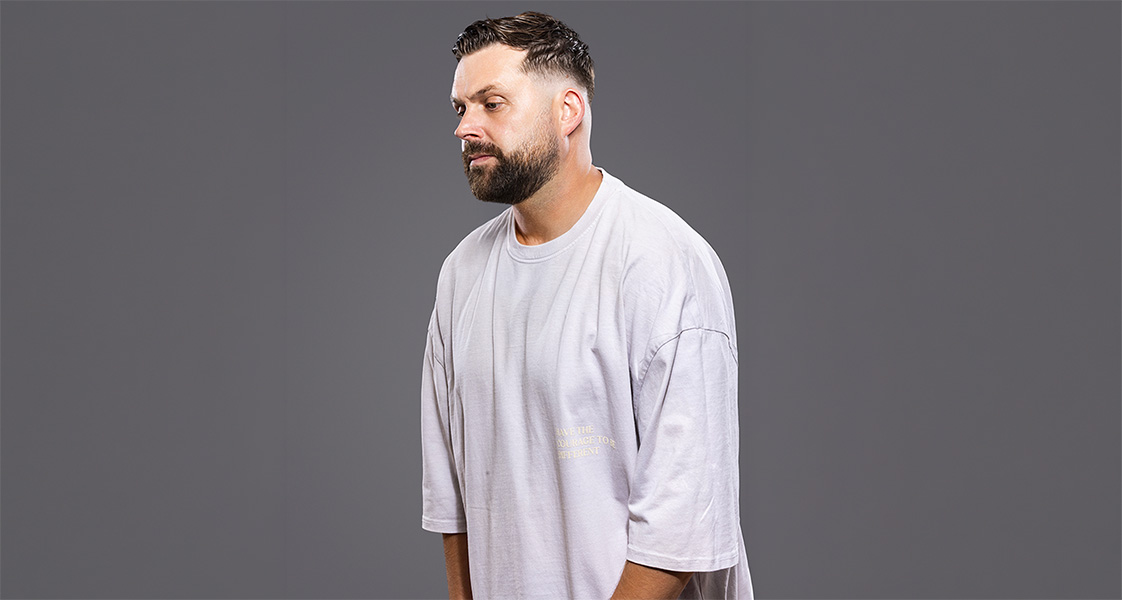
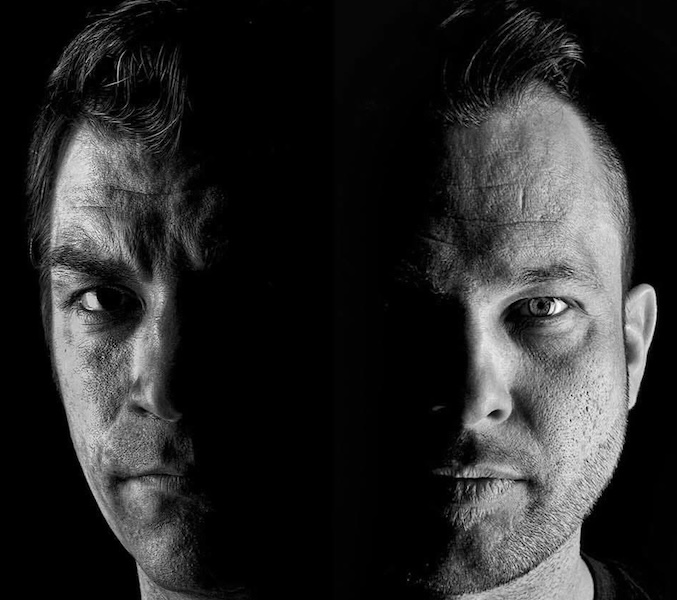
Martin Iveson, better known as Atjazz, has spent decades shaping the emotional core of deep house. His productions balance warmth, precision and soul in a way that has become instantly recognisable across dancefloors worldwide.
With his new track ‘Love You Day One’ appearing on Freerange Records’ ‘Thirty Years Volume Three,’ he steps into a milestone moment for a label he’s long been connected to behind the scenes.
He stops by for a chat to reflect on craft, longevity, collaboration and the evolving landscape of house music with the same honesty and humour that define his work.
WWD: Your track on Freerange Records ‘Thirty Years Volume Three’ feels deeply emotional and unmistakably you. What emotional landscape were you drawing from when you started this track?
I’m not sure what happened here. My fondness for, let’s say, ‘Proper Deep House’ will never fade, and the uprise of new dance music masquerading as the genre really made me zone in on what I felt my sound was built on. A pure sound for closing your eyes and dancing your ass off to; this song has no lights, cameras or air cannons, let’s put it like that.
WWD: When you begin a new piece of music, what usually comes first for you rhythm, harmony, or mood?
In house music, either some interesting sampling of some of my synths or messing about with kick drums from my Elektron Model Cycles usually gets me off the starting block.
WWD: Do you think of your tracks as stories, or do they emerge more as abstract emotional expressions?
I guess some more invested pieces from, say, ‘albums’ have a little more story to them, but most of my music is about how that soft centre makes you feel.
WWD: What role does silence or space play in your compositions?
This is your first original production for Freerange. What made this the right moment to step into that space? I think because of my involvement with Freerange and their family of labels over the years as a mastering engineer, it made me realise this is definitely a safe home for my music. I’d say on this song, there’s not much ‘space’ to breathe, it just keeps you glued down.
WWD: What aspects of their identity resonate most with your own musical philosophy?
I like their open mindedness and their breadth of artistic coverage. I feel one always gets a very nice surprise when Freerange releases.
WWD: How did you approach contributing to a project that celebrates three decades of the label’s evolution?
I wasn’t officially asked to make a song! Lol… I kind of forced myself upon them! Sorry lads!
WWD: Volume 3 brings together long standing contributors and new voices. What does that blend of generations mean to you as an artist with your own long history?
Music is music if it’s good, it’s good. I believe anyone that can genuinely raise their production game to release on such a label deserves that privilege.
WWD: Did you feel any pressure or responsibility contributing to a milestone release like this?
I think those days have passed for me, but I definitely put my best foot forward and pressed that well worn ‘work harder’ button for Freerange, and that would always be my attitude.
WWD: What do you think Freerange represents within the wider house and electronic landscape today?
Keeping a vibe alive that has been well loved for a long, long time. No trending output or coat tailing more honest and definite, with a concrete vision.
WWD: Your chord language is instantly recognisable. What guides your harmonic decisions when building a track like ‘Love You Day One?’
Unlike my protege Si Tew who claims to know only three chords, I know four… I just put them in a different order sometimes. That limitation makes all my music sound the same… Not really! I know a bit, but have never had any training. Many years of trial and error and emotional splurge keep my music within my own boundaries.
WWD: What was the most challenging element of this track to get right?
To be honest, it wasn’t a struggle. It’s just making sure it will work on the dance floor and double making sure I give Jamie and Tom the option of being proud to release it!
WWD: Your mixes always feel warm and spacious. What are the key decisions that create that atmosphere?
Ha! I always feel I put way too much in my music and find it hard to see the space. It’s more a feeling than a decision this isn’t manufactured, it’s made with emotion.
WWD: Do you have any studio rituals or habits that help you get into the right creative headspace?
Not really. I tend to avoid lighting up incense and ringing bells to rid myself of musical demons. I’ll be honest, I have such little time for the creative part I just get in and do it. My studio is set up for two things: mastering and music production, in a way that I can record, produce and mix anything at speed.
WWD: How has your production workflow evolved over the years, especially with changes in technology?
I think just getting things in place for working at a high level of output. Back in the day, I had all the synths linked; everything was for music creation. Times have changed, and now my studio is a working factory for speedy, accurate production and high end mastering.
WWD: What piece of gear or software has been most central to your sound recently?
My SSL Big Six really gave my studio the in line recording and playback perfection I was looking for and saves me a lot of time.
WWD: Do you still experiment with new tools, or do you prefer refining a familiar palette?
Nah, I love a new toy. They mostly don’t float my boat, but occasionally something becomes part of my work setup.
WWD: Your work sits in a lineage that includes deep house architects like Ron Trent and Charles Webster. How do you see your place within that continuum?
Charles was a mentor to me. We worked a lot together back in the day, and I learned a lot from him about trusting myself and my music. I did look up to both Charles and Ron in a BIG way I still do but I feel like I’m at a point now where I can sit comfortably beside these artists as their equal after so much time has been invested into myself and the scene.
WWD: Which artists or scenes shaped your understanding of groove and emotion early on?
Acid Jazz, Trip Hop and Jazz Funk are where I really got my initial inspiration to make my own music back in the early 90s. Following that, artists such as The Mighty Bop, DJ Cam, DJ Smash, DJ Krush and artists alike really helped me find the jazz and soul in electronic music, which has stayed with me ever since.
WWD: How do you stay inspired after decades of producing, performing, and evolving?
I really love music, and when I think about that too much and the whys, I start spinning out so I just let it take me with it. To have been given the opportunity to do this as a full time job is something I don’t ever take for granted, and I go to work every day like everyone else and work my ass off.
WWD: What has changed most in your approach to music since your early days?
Not much, to be honest. I think when you have a blank space and you fill it with stuff and it makes sense, that’s all there really is. One thing I can say is that being a DJ has made me create more dance floor music over the years, but the other stuff is still in there wanting to get out.
WWD: What do you think deep house means in 2026 compared to when you started?
No comment… I think that’s better left unsaid.
WWD: You’ve collaborated with a wide range of artists over the years. What qualities make someone a compelling collaborator for you?
Feeling someone that can convey warm emotions through their work well and has a great attitude to moving forward and growing.
WWD: What’s the most surprising thing you’ve learned from a collaborator?
That I still have a lot to learn.
WWD: Do you approach remixes differently from original productions in terms of emotional intent?
Sometimes. I may have answered this differently 15 years ago, but I feel that people come to me for what I do, so emotionally and for people to recognise my sound from the first beat the same emotional attitude has to be in place whether it’s an original piece or a remix.
WWD: Your music resonates across very different dancefloors worldwide. What do you think makes your sound travel so well?
I have no idea!!! Lol. Man, I’m fortunate to have any of my music resonate with anyone who will put up with it! I’m not too ‘this’ and I’m not too ‘that’, and if I may be so bold to say that my sound is very me and unique, I guess.
WWD: How do you think about the relationship between club energy and home listening when producing?
I don’t. My music is made either for the dance floor and DJs or for general consumption. People can then choose to listen to the dance stuff at home if they like, but I don’t create anything just for one space.
WWD: Do you ever imagine specific spaces or audiences when creating a track?
Occasionally, if I have a special outdoor event or festival where there are big crowds of people, I’ll make some airy edits to suit but otherwise, it’s more about selection as a DJ.
WWD: What advice would you give your younger self starting out in production?
Be humble this time around.
WWD: What do you hope listeners feel when they hear Love You Day One?
A true representation of the sound of Atjazz’s deep house without having to guess who it is.
WWD: What ideas or sounds are you exploring right now that feel fresh or unexpected?
Generally, and if I get the chance, I’m trying to get into my Oberheim TEO 5 to find the root of its sound and get it to make the most basic of sounds, then build on that. I’m also investing heavily and changing out my outboard mastering gear. It’s never ending.
WWD: Are there any genres or approaches you’re curious to experiment with in the future?
Deeper, more electronic, close and emotional techno.
WWD: What’s next for you Martin? Anything else you’re working on that you can share after this Freerange release? The House of Starbase 17 album, Starbase 17 Spacewalk album, Martin Iveson album, Mist Works album, many remixes and some other projects I can’t yet announce.
WWD: Wow, sounds amazing! Thanks for the chat 🙂
‘Love You Day One’ is available here