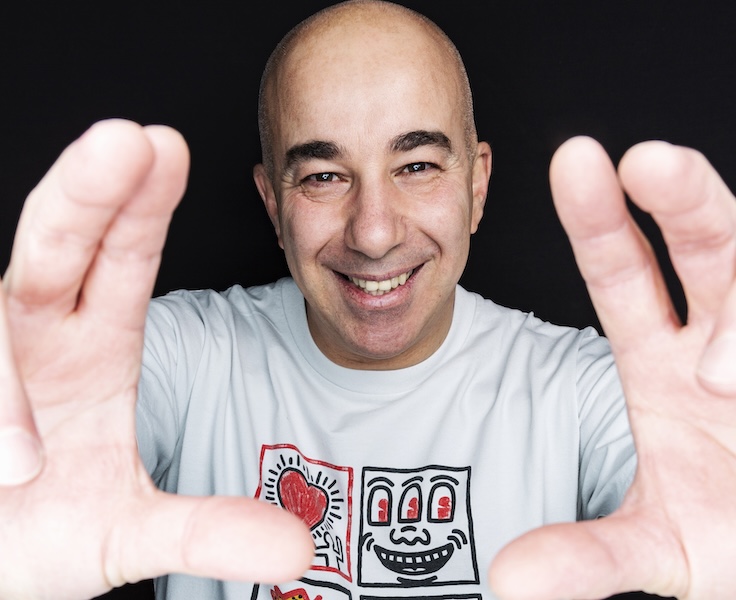
With three decades spent shaping the house music landscape, Rocco Rodamaal has built a career defined by musicality, depth, and an enduring connection to the dancefloor.
From his formative years in Lyon and the landmark Rodamaal project with Manoo and Alex Santos to releases on Freerange, COD3 QR, Memories, Dopewax and Stay True Sounds, his work has consistently bridged soulful traditions with a forward-thinking approach to production.
Now, as Freerange celebrates 30 years, Rodamaal returns to the label with ‘Body and Soul,’ a collaboration with vocalist Oliver Night that captures his belief in the emotional and restorative power of dance music.
We caught up with Rodamaal to reflect on his long-standing relationship with Freerange, the experiences that have shaped his three-decade journey, his deep connection with the South African house scene and the balance between staying rooted and continuing to evolve.
WWD: How does it feel to be part of Freerange’s 30 year celebration, especially as an artist with three decades of your own influence in house music?
Being part of Freerange’s 30 year celebration feels special because my relationship with the label goes way back. My first release with them was The Club Culture EP in 2007, so contributing to this anniversary feels less like a guest appearance and more like returning to a place that has been part of my journey. Freerange has spent three decades shaping the global house landscape with integrity and depth, values that mirror my own path. After 30 years of producing and DJing, this milestone feels like a meeting point between two long term visions of house music: timeless, soulful, and built to last.
WWD: ‘Body and Soul’ blends your trademark musicality with Oliver Night’s unmistakable voice. What drew you to working with him on this track?
“Body and Soul” started with the lyrics, this idea of feeling music deeply, “in my body and my soul.” I had the demo and the message, but I needed the right voice. When I sent it to Jimpster, he immediately suggested Oliver Night and the moment I heard Oliver’s tone, everything made sense. He didn’t just sing the words, he embodied them. That intuition from Jamie is what made the collaboration happen.
WWD: The record celebrates the healing power of dance music. What emotions or experiences were you channeling when creating Body and Soul?
I was channelling the idea that dancefloors can be places of repair. After decades touring, from Hi Ibiza to Djoon in Paris to South Africa I’ve seen how music reconnects people to themselves. “Body and Soul” is built on that feeling: the moment when groove, harmony and emotion realign something inside you.
WWD: ‘Freerange Vol. 4’ focuses on timeless grooves, musical depth and soul. What do those qualities mean to you personally as a producer?
They’re the pillars of my work. Timeless grooves mean the track still resonates years later. Musical depth means intention behind every chord and every arrangement. Soul means humanity. These values shaped me from my early days in Lyon and continue to guide every release, whether on COD3 QR, Memories, REKor or Freerange.
WWD: You’ve played alongside artists like Laurent Garnier, Black Coffee, Louie Vega, Kerri Chandler, Derrick Carter and many more. How have these encounters shaped your artistic evolution?
Sharing the booth with artists of that calibre teaches you precision and humility. Garnier’s storytelling, Vega’s musicianship, Kerri’s swing, Black Coffee’s emotional architecture, each encounter sharpened my identity. They didn’t change who I am, but they refined how I express it.
WWD: Your remix catalogue spans Marshall Jefferson, Moodymann, Atjazz, Todd Terry, Barbara Tucker, Reel People and Dennis Ferrer. What makes a track exciting enough for you to want to reinterpret it?
A remix must respect the original while offering a new perspective. I say yes when a track has a strong emotional core: a vocal, a chord progression, a groove that speaks to me. If I don’t feel a connection, I don’t touch it. That’s why my remixes for Louie Vega, Moodymann, Atjazz or Dennis Ferrer carry my signature without erasing theirs.
WWD: You have a rare and devoted following in South Africa, with heavyweights like Black Coffee, Shimza, Themba and Enoo Napa among your supporters. What do you think creates such a strong connection between your sound and the South African scene?
South Africa embraced my sound early and intensely. The deep and soulful scene there has an emotional depth that mirrors my own approach. Since my first tours in 2008, and every year since, I’ve felt a genuine cultural resonance. When artists like Black Coffee, Shimza, Themba or Enoo Napa support your work, it’s not hype, it’s recognition of authenticity.
WWD: With 30 years of production and DJing behind you, how do you continue pushing forward creatively while staying rooted in the deep and soulful traditions that define your work?
By staying curious but grounded. I evolve technically with new tools, new workflows but emotionally I stay anchored in my groove, harmony and storytelling. Innovation without roots becomes noise. Roots without innovation become nostalgia. My goal is to live in the balance.
WWD: You’ve released on labels like COD3 QR, Memories, Dopewax, Stay True Sounds, Armada and many more. What makes a label feel like the right home for your music?
A label feels right when it respects the music and understands the artist. I look for teams who curate with intention, not algorithms. When a label has a clear identity and treats releases with care, I trust them with my work. Freerange is one of those homes.
WWD: Your remixes include work for Louie Vega, Moodymann, Fred Everything, Atjazz and others. What can you share about the direction you’re taking with these new versions?
I aim for reinterpretation, not decoration. I keep the emotional DNA of the original but rebuild the architecture: deeper grooves, new harmonies, different dynamics. My goal is to make the track speak in my language while preserving its soul.
WWD: When you begin a new track, what usually comes first for you: rhythm, harmony, atmosphere or a conceptual idea?
Harmony. Chords are my emotional compass. Once the harmonic world is defined, rhythm and atmosphere fall into place naturally. The concept emerges once the music starts breathing.
WWD: You’ve toured South Africa every year since 2008. What keeps that relationship so meaningful and creatively inspiring for you?
South Africa has been meaningful to me not only because of the culture and the energy of the dancefloors, but also because I’ve been lucky to create tracks that became part of the country’s soundtrack. “Memories” feat. Marcel turned into a true anthem there, and titles like “New Awakening” on Freerange in 2008 helped build that connection early on. Even my remix of “Bring On The Night,” which I’m going to re released on my label Memories, became a staple. So the relationship isn’t just emotional, it’s rooted in music that found a home there. South Africa doesn’t listen to house, it lives it. And every tour reminds me of that!
WWD: Looking back at your discography, from ‘Someday’ to ‘Break 4 Love’ to your latest releases, what moments feel most defining in your journey?
Looking back, several moments shaped my journey, but Rodamaal was definitely a defining turning point. The group I formed with Manoo and Alex Santos didn’t just give me an identity beyond DJing, it changed our careers. Thanks to Ben Watt from Everything But The Girl, Rodamaal became a catapult into the international producer scene and opened doors we couldn’t have imagined at the time. From there, tracks like “Someday” and “Break 4 Love” expanded my reach worldwide, and South Africa gave me a second artistic life, one built on authenticity, connection and a deep emotional resonance with the audience.
WWD: What direction is inspiring you most right now, whether musically, culturally or emotionally?
I’m inspired by the intersection of roots and futurism: deep harmonies, Afro rhythms, electronic textures. Culturally, I’m drawn to artists who build communities rather than careers. Emotionally, I’m focused on honesty: making music that reflects where I am, not where the market wants me to be.
WWD: What’s one thing you still want to achieve as Rocco Rodamaal that you haven’t yet explored?
Even though I’ve already released an album, The Bridge in 2013 on Sony Music South Africa, which connected different continents and influences, there’s still a direction I haven’t fully explored. I’ve always been fascinated by the cinematic side of music. I grew up admiring composers like Hans Zimmer, Vangelis and Ennio Morricone, and I’ve had this long standing desire to create an album that feels like a series of short films, tracks that spark imagination and visual storytelling. You can already hear touches of that in some of my productions. My recent release “Summer Rising” on COD3 QR is built for the dancefloor, but it carries a cinematic dimension that hints at where I want to go. So the next big step for me would be a project that blends my deep and soulful roots with a more narrative, film inspired approach.
WWD: We can’t wait to hear it! Thanks for the chat 🙂
‘Body & Soul ft. Oliver Night’ is available here