


Ahead of the November 24th release of their forthcoming EP ‘COSMIC INTELLECT,’ Los Angeles-based electronic duo Dance Spirit continue to push the boundaries of their sonic universe, exploring the intersection of human consciousness, technology, and electronic music.
Arriving via their own imprint, 交感 Koukan, the five-track project moves fluidly between hypnotic deep tech, experimental electronica, psychedelic textures, and atmospheric soundscapes, balancing dancefloor energy with deeper introspection. Following their recent releases ‘Lunatic’ and ‘ACTIVATION ‘, ‘COSMIC INTELLECT ‘marks another chapter in the duo’s evolving creative journey.
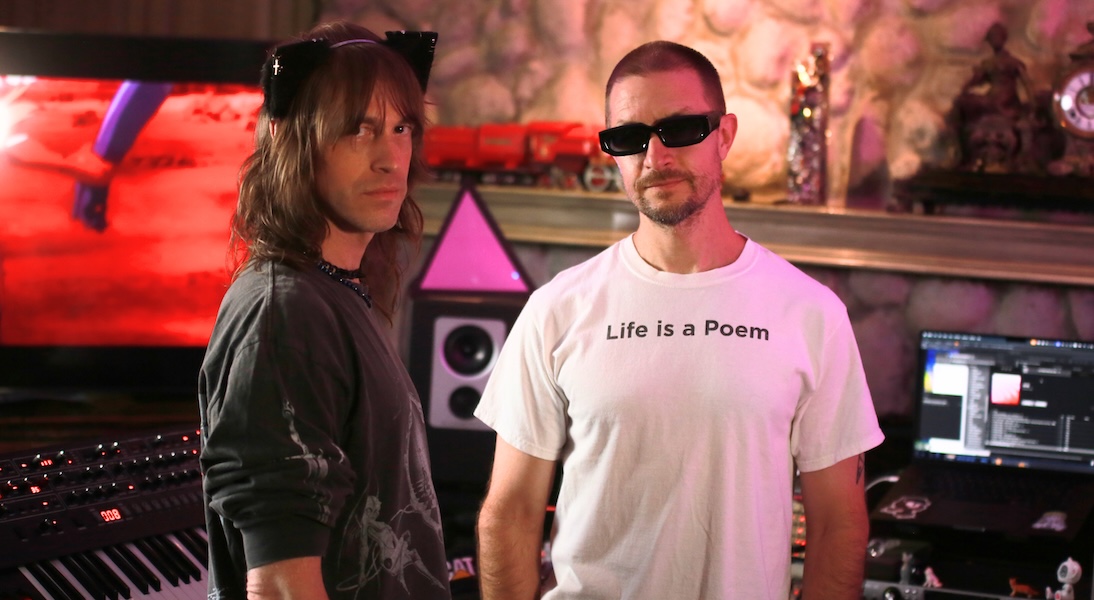
We caught up with Chris and Reagan to explore the inspiration behind the EP, their collaborative studio process, the relationship between creativity and technology, and what’s next for Dance Spirit.
WWD: Your forthcoming EP, ‘COSMIC INTELLECT,’ moves between hypnotic deep tech, experimental electronica, and atmospheric soundscapes. What was the initial creative spark behind this project, and how did you approach building its sonic identity?
Chris: Right now, we’re in the process of coming back together, and most of our recent releases have been about excavating old sessions and rediscovering music from our archive. We’ve been giving these tracks facelifts, updating arrangements, remixing, and refining the production and mastering. It’s really been about revisiting our catalog and thoughtfully pairing music together in a way that makes sense, curating the strongest releases we can from what we’ve created over the years.
As far as the sonic identity goes, I think the Dance Spirit aesthetic has always been a combination of Detroit techno and raw, minimal-inspired grooves, layered with progressive house music theory and the kind of psychedelic, progressive influences you’d associate with Pink Floyd. There’s always been this interplay between the raw, hypnotic foundation of the groove and the more expansive, atmospheric elements that we build on top of it. I think that’s something we naturally accomplish whenever we make music together. It’s an aesthetic that’s always been at the heart of Dance Spirit.
ROBOTEK: COSMIC INTELLECT blends old and new. The title track and NEURAL NETWORKS were older, finished tracks we updated with new mixdowns and mastering. (We actually self-released NN over the pandemic, even, but I always felt the mix and mastering could be better.) ‘turn the corner’ and ‘electric on my skin’ were basically just old sessions that were strictly the beats and basslines, and we engineered all the new synths and sounds around those based on the techniques and skills we’ve acquired in the studios individually ourselves over the past six years.
We thought COSMIC INTELLECT and NEURAL NETWORKS were natural choices to release together, as cosmic intellect runs on one organic neural network that permeates the entire cosmos. ‘electric on my skin’ refers to frisson, that natural occurrence in some people when they listen to music or experience some exciting realization, or for me, when I feel connected to THE ALL, this happens as well.
The ambient version of ‘electric on my skin’ was a happy accident: when we were previewing stems during the mixdown process, I had the synths and vocals soloed, and I ‘ electric-on-my-skin’d myself to the absolute heavenly beauty that touched my eardrums.
‘turn the corner’ picks up on the experimental electronic IDM-pop writing skills I’ve evolved over the years, and started out as the persistent drum loop, which was a one-minute-and-30-second loop we recorded off the Elektron Machinedrum back in 2016. Everything else in it is new. Both ‘turn the corner’ and ‘electric on my skin’ feature a beat mashing/cutting/glitching VST FX unit that I vibecoded. It’s a port of the Infinite Digits Ectocore Eurorack module, which is out of production. I’d always wanted one, and luckily the firmware is open source, so I can load it up, and it works, sounds great, and uses minimal CPU! I’ve also incorporated that effect as a fun little thing to play with in our live performances.
WWD: Your productions often balance intricate sound design with a strong sense of groove and movement. Can you walk us through your creative process in the studio? Do your ideas typically begin with a rhythm, a particular sound or piece of hardware, or something more abstract?
Chris: Historically, I’d say about 75% of our creative process began with me laying down the foundation of a track, whether that was a groove, a bassline, or maybe a chord progression. I would essentially establish the rhythmic and musical framework, and then Reagan would come in and sprinkle his magic over it. That might be developing the hook, adding melodies, introducing intricate sound design, or exploring the modular side of things. He would bring this additional musical and technical dimension to what I’d started, and that interplay is really what you hear in a lot of Dance Spirit’s music.
Of course, there have also been instances where I’ve contributed an entire track to the project, or Reagan has brought in something he’s created completely on his own. So our catalog reflects a combination of those different creative approaches.
Looking ahead, we’re planning to get back into the studio together early next year, which I’m really excited about. We’ve both evolved quite a bit as individual artists over the six years we’ve spent apart, and I think it’ll be fascinating to see how those experiences influence our creative dynamic. I’m genuinely curious to discover what kind of music comes out of us when we start creating together again.
ROBOTEK:: I’d say it could go either way: sometimes we start with the beats, sometimes we start with a bassline, sometimes we start sculpting the sonic environment first, sometimes the melody is the first thing we put down, or maybe we have lyrics in mind from the top. Sometimes it’s even just a concept. It really depends on how we’re feeling, and what we set out to accomplish.
Do we want to make a dance track, or an ambient track? Sometimes we set out to make one thing, but it turns into something else. I think it’s important to not be so formulaic with your approach to making music, because it keeps things fun, interesting, unexpected, and yields way more happy accidents!
Don’t force a song to try and become something it’s not turning into. If you want to make a techno song but it comes out as something else, don’t keep trying to make it techno; just save the idea and start up a new session if you really want to go techno. I’d even encourage you to finish the song that didn’t turn into what you wanted, and let it become what it wants to be. These experiments matter in the studio, because they can lead to new tricks and techniques.
At the end of the day, we want to create a sonic landscape that transports you to another world Beyond the Void. For the dance music side, the groove is always important: we want people to dance. The electronica, ambient, and “b-side” material on our releases let us play around with ideas outside the dance floor, and those songs usually yield new techniques we can bring back into the dance music. It’s fun to have a release that isn’t all dance music, and I think it’s important to wear the alchemist’s hat in the studio, experimenting all the time with different styles and just flowing. Get dirty, get down in it, and most importantly, HAVE FUN!
WWD: There’s a distinctly exploratory quality to your music. How much of your creative process is intentional versus spontaneous? Have there been moments where an unexpected sound, technical limitation, or studio experiment has completely changed the direction of a track?
Chris: I think at this point, we’re both experienced enough creatively and artistically that we can just walk into the studio, start creating, and let the universe give us whatever it’s going to give us. I’ve always believed that art should be approached with a sense of childlike wonder. It’s about feeling rather than thinking, allowing yourself to explore without too much intention or expectation.
I think we do a pretty good job of just diving into the machines, experimenting, and finding ways to express ourselves through whatever comes out of them. Whether you’re DJing or producing, electronic music is such a beautiful medium for happy accidents, unexpected discoveries, and even mistakes that turn into something extraordinary.
To me, creativity and experimentation go hand in hand. You have to be willing to explore, to make mistakes, and to follow things wherever they lead. That’s where some of the most exciting results come from. There’s always a certain kind of magic in discovering something you never intended to create.
ROBOTEK: Sometimes, the idea of “less is more” in music and art translates to gear/machines/self-imposted-limitations in the studio. It’s important not to load up on new gear and plug-ins all at once, for instance, because these tools require time to learn and really harness what they are capable of. It’s easier to learn one device at a time rather than five at once! But then, taking that into the context of self-imposed limitations, you could always limit yourself to just a couple of machines, maybe even just one drum machine and one synth. It forces you to use your tools differently, focusing more on sound design and pushing them beyond their limits.
I’d say intentionality and spontaneity go hand in hand. All of our music and art is intentional, but the way it comes together is spontaneous. And we’re paradoxically intentionally spontaneous, because putting unnecessary pressure on yourself in the creative process just ruins the vibe, man!
To the latter part of your question: yes, unexpected results from new sounds designed in a session can totally change the direction and vibe of a track. Sometimes we’ll make a sound that doesn’t really fit the track, and lends itself to another style, so we’ll save it for another song. Or if it really feels like “ok this is the hook, this is the jam, this is the vibe, everything else is not working, let’s build around this because this is what’s going to make the song.”
WWD: You’ve developed a sound that moves between organic, psychedelic textures and more futuristic electronic elements. What instruments, synthesizers, or production techniques have been particularly influential in shaping ‘COSMIC INTELLECT?’ Are there any pieces of equipment or unconventional methods you find yourselves returning to?
Chris: Since the music on Cosmic Intellect was originally created before the pandemic, we’re talking about a studio setup from seven or eight years ago. If I remember correctly, Reagan had a modular system at the time, although I couldn’t tell you exactly which modules he was using. We were working pretty extensively with the Elektron Analog Rytm, a little bit of the Roland TR-8, and I believe some of the synth work on this release came from a Prophet-6. We were also using the TC-Helicon VoiceLive Touch for vocal processing, which added another dimension to the sound.
That was essentially the Dance Spirit studio back then, but things have evolved quite a bit since. Reagan’s current setup is considerably more elaborate, and he’s been exploring some really interesting territory with artificial intelligence. He’s actually been using AI to develop his own plugins, combining his knowledge of modular synthesis and sound design with the possibilities of this new technology.
I think that’s a fascinating direction to take things, and from what I’ve seen, he’s been creating some pretty badass tools. I’m really looking forward to getting my hands on them and seeing what kind of creative possibilities they open up when we get back into the studio together.
ROBOTEK:: We wrote the title track COSMIC INTELLECT in a studio in NYC while we were there for a pre-pandemic performance. That song’s synths came from the Prophet-6, while the majority of the beats were programmed on the Elektron RYTM and NI Maschine, and vocals performed through the TC-Helicon VoiceLive Touch.
‘turn the corner’ started off as a one-and-a-half-minute Elektron Machinedrum sequence recording from a 10-year-old project, while everything else is new. I recorded lots of stacked vocal passes for natural chorusing and stereo width—probably about five to six vocal passes for each verse/chorus. The bass-synth is from a wavetable softsynth called “NYQUIST,” which I’m currently developing and vibecoding with Claude, and the percussion glitches come from the ECTOCORE plugin I ported, mentioned previously. Other synths are from the Minimal Audio Current plugin, and any distortion comes from their Rift plugin (I really love their plugins!!).
NEURAL NETWORKS has a lot of modular (can’t remember WHICH modules), NI Maschine, and Elektron RYTM.
‘electric on my skin’ is a RYTM/Maschine based beat with glitch fills courtesy of the ECTOCORE port plugin, synths from Current, and vocals generated through my dialed-in vocal generation process on Suno. I basically have 100 pages of lore loaded into a project in Grok, where I use it to help me write lyrics for a given theme based on the styles of lyrics I’ve written in previous songs and my extensive sci-fi lore.
I then upload the song I’m working on to Suno as a song to “cover,” paste in the lyrics, my style prompt, adjust the model weights, generate 6 or so variations, settle on which one I like the best, split to stems, and then bring the vocal stem into the project, and give it a proper fun treatment with Polyverse Music Gatekeeper or Devious Machines Infiltrator (OR BOTH WHY NOT?!), and of course run them through that oh so awesome Erica Synths Echolocator dub delay box (my favorite delay ever).
WWD: As a duo, how do you navigate the exchange of ideas in the studio? Do you tend to approach production from different perspectives, and how do those differences influence the final result? Can you share an example from the EP where that creative exchange led somewhere unexpected?
Chris: What I’ve come to realize about Reagan and myself is that we approach music from two very different but complementary places. I’ve always referred to the music I make as a solo artist as “body music,” because I’m so connected to the physical experience of the groove and how my body responds to whatever I’m creating. Reagan, on the other hand, tends to approach things from a much more cerebral perspective. So I’ve always liked to say that I’m the body of Dance Spirit, Reagan is the mind, and together we create the soul.
We also share so many common interests and musical influences, particularly when it comes to weird, eclectic, and unconventional music. Because of that, we rarely, and I genuinely mean rarely, disagree about the musical direction of a track. There’s a natural synchronicity between us that I think is incredibly important to our creative relationship.
As for Cosmic Intellect, there’s actually a great example of how our creative process can lead to unexpected discoveries. About halfway through the title track, these really catchy, percussive drum hits come in and carry the groove through to the end, introducing this additional layer of hedonistic tension. Those drums actually came from a loop we’d created for an entirely different track years earlier. We pulled it out of the archive and started layering it over Cosmic Intellect while preparing or performing one of our live sets at the Mirage. It worked so well that we decided it needed to become a permanent part of the track.
I think that’s a perfect example of how we work together. Sometimes it’s not about creating something entirely new, but recognizing when two seemingly unrelated ideas suddenly belong together.
ROBOTEK:: Chris is more groove-driven; I’m more mind-driven (tho, I try to make my heady stuff as groovy as I can haha)… I can tend to go overboard in the studio (I’ve been making tons of 144bpm techno for my Robotek Reagan project lately), so Chris always has a good way of keeping me focused and body/groove oriented for our dance music cuts. I think our differences in approach and understanding of music create the richness and depth of our sound, where we can get body and mind in sync and unlock the power of the soul through frequency and sonic adventure.
Most of our creative exchanges are jokes or comments about whatever anime, drama, or Godzilla movie we have on TV in the background. On the music and art side, we’re always feeding each other ideas, brainstorming, encouraging, and doing whatever we can to push ourselves beyond our limits as musicians and artists.
Since we wrote COSMIC INTELLECT about 8 years ago now, it’s kind of hard to remember exactly what went down. A lot of what we do in the studio is unspoken; we just let the music flow out from within!
WWD: ‘COSMIC INTELLECT’ explores the relationship between human consciousness and technology. Rather than looking at AI purely as a production tool, we’re curious about the philosophical side: how do you think technology is changing the way we perceive creativity, consciousness, and what it means to make something distinctly human?
Chris: That’s a huge conversation and a pretty loaded question, but I think what it ultimately comes down to is that we’re living through the emergence of artificial intelligence, whether we like it or not. It’s happening, and it’s already becoming deeply integrated into the way society operates, from corporate institutions and scientific research to the arts and everyday life.
I think there’s enormous potential in combining human imagination with technology, particularly in the sciences and creative fields. The ability to bring together abstract ideas, explore new connections, and generate knowledge that we might not have arrived at otherwise is incredibly exciting. I’ve also been thinking about the idea that after intelligence comes reality. In other words, I wouldn’t be surprised if artificial reality becomes the next great technological frontier after artificial intelligence, assuming we don’t manage to blow ourselves up before we get there.
What concerns me more than AI’s influence on the arts is its broader societal implications. On one hand, we’re being introduced to this technology as something that’s going to make our lives easier, expand our creativity, and open up extraordinary possibilities. On the other hand, there’s an accelerating arms race between global superpowers to integrate artificial intelligence into military systems and warfare. To me, that’s a far more unsettling conversation than whether someone is using AI to make a piece of music or generate an image.
As far as creativity is concerned, I understand why some artists feel threatened by it, but I’ve never really approached art from a place of insecurity or competition. I think the value of an artist ultimately comes from their individuality, their experiences, their perspective, and the consciousness behind what they’re creating. A machine might be able to imitate an aesthetic or replicate certain characteristics of someone’s work, but that doesn’t mean it can replicate the human being behind it.
Technology can reproduce the patterns of our expression, but that isn’t necessarily the same thing as having lived the experiences that inspired it. And I think that’s an important distinction. For me, AI is simply another tool to explore, and I’d rather approach it with curiosity than fear. Ultimately, I don’t think technology diminishes what makes us human. If anything, it’s forcing us to ask some pretty fascinating questions about what being human actually means.
ROBOTEK: Being raised on an (un)healthy amount of cyberpunk and sci-fi literature kind of set me up for all of this. In fact, I’ve been waiting for AI ever since 1996, when I read William Gibson’s ‘Neuromancer’ in sixth grade, on the recommendation of the bookstore clerk. My best friend in elementary school introduced me to the internet a year earlier, in fifth grade (he later co-founded Zimride, which eventually became Lyft!).
In kindergarten, I used my first computer, an Apple IIe, and learned the software LogoWriter, which lets you use code to draw pictures. Before that, at four and five, I took apart radios and electronics at my parents’ house to figure out how they worked. I’d eventually hide them in places I thought my parents wouldn’t notice, since I couldn’t put them back together. And let’s not get started on the Transformers cartoon. And all the sci-fi cartoons I watched growing up. I’ve been waiting for the sci-fi future of my dreams for a VERY long time: teleportation, genetic modifications, AI, wormhole travel, faster-than-light travel, SPACE—the final frontier. My whole life I’ve been saying to humans about sci-fi technology: MAKE IT SO! (RIP Patrick Stewart).
Humanity’s history is built on technological paradigm shifts: from hunting with weapons, to the wheel, to refrigeration, to breeding new strains of vegetables, and that’s just a small sampling! And I don’t think humans have stopped evolving either, and the prospects of AI integration into human evolution are wildly exciting: genetic adaptations (I could finally have real cat ears on my head!), rejuvenation pods (jump in real quick, heal that body in minutes!), nano-LED–ink tattoos, cures for diseases (not just keeping up with vaccinations, pure genetic code editing)… AI can help us map out these paths, maybe even give us the insights we need to cross the gap between imagination and reality. Obviously, everything good can be used for bad, yet everything bad can also be used for good. Nikola Tesla raised this point in his autobiography, noting that when asked whether the possible bad parts stop him from making things, he says absolutely not.
Ultimately, how we engage with the world is up to each of us. Are you going to use technology to simply be lazy? Or are you going to use it to create and take action in the world? My good friend Matt Xavier and I had a discussion about tech and laziness the other day, and he pointed out that most technology we have comes from filling a human need, and nobody REALLY needs to work meaningless, soul-sucking jobs, right? Other than to survive? We’ve already been using automation. Hell, the idea of automation to make life easier traces back to ancient Greek literature around 700BC, and in ancient water clocks, irrigation systems, and mills.
WWD: Your music often exists somewhere between functional dancefloor energy and deeper, more introspective listening. When creating a track, how do you approach that balance? Do you consciously imagine how it might translate in a club environment, or do you allow the music to find its own destination?
Chris: I definitely believe in letting the music find its own destination. I think we’ve touched on our creative process in some of the previous questions, and that philosophy doesn’t really change whether we’re making something for the dance floor or something more introspective.
For me, the bigger conversation is about the importance of developing a body of work as an artist. I think it’s great to create an individual track, but ultimately, you need a larger collection of work to really understand who you are creatively and to communicate that identity, both to yourself and to the world.
That’s something I’ve come to appreciate more and more, and it’s very much how I’m approaching music these days. If you’re constantly trying to encapsulate everything you are as an artist into a single track, you’re going to drive yourself crazy. There’s just too much expectation attached to something that’s inherently unpredictable.
Every time you create, you’re in a different place emotionally, mentally, and creatively, and naturally, the results are going to reflect that. I think the beauty of building a body of work is that you give yourself the freedom to explore all those different dimensions without forcing every individual piece to represent the entirety of your artistic identity.
Some tracks are going to move people physically, others might move them emotionally or intellectually, and some might accomplish all three. I think you just have to trust the process and allow those different expressions to exist together. Over time, they collectively tell a much bigger story about who you are as an artist.
ROBOTEK: Studio sessions usually start in one of two ways: purposeful direction, or just going for it without any destination in mind. I find the best new material comes after unrestrained sessions of pure experimentation: the electronica cuts, the IDM cuts, the ambient cuts—these are all based on experimental sound design, which leads the way to new studio tricks and techniques and sound palettes, which then can be worked into the dance music cuts in a more tangible, dance floor friendly way.
WWD: There’s a strong sense of connection and collective experience running through the Dance Spirit philosophy. What do you believe electronic music can communicate beyond words, and how does that idea influence the atmosphere or emotional response you hope to create through your productions?
Chris: I’ve always loved dance music because I’ve felt this almost symbiotic connection with it. If I’m happy, the music is happy. If I’m sad, it’s sad. If I’m angry, it’s angry. I’ve always appreciated that subjectivity and the way electronic music can become a reflection of whatever you’re feeling or experiencing in that moment.
At the same time, I think there’s something inherently celebratory about dance music. It’s music for celebrating life, bringing people together, moving our bodies, and sharing an experience. There’s something beautiful about that collective energy and the way music can connect people without anyone having to say a word.
As far as the Dance Spirit philosophy goes, I’m not entirely sure where we stand today. That’s something we’ll have to rediscover when we get back into the studio together. But historically, I was personally obsessed with the pursuit of beauty. How beautiful could we make the music? How strange or unconventional could we make it while still creating something emotionally compelling? I think that exploration was always a big part of our identity.
Ultimately, I want people to lose themselves in the music. I love the idea of creating these hypnotic, meditative environments where listeners can disconnect from the outside world and travel a little deeper within themselves. There’s something almost spiritual about surrendering to a piece of music and allowing it to take you somewhere beyond thought.
Like I’ve always said, the music sounds better when your eyes are closed.
ROBOTEK: I believe in the spiritual power of music and that it’s a universal language. It’s a powerful medium that touches the human emotions and nervous system in a way other mediums can’t. We all respond to melodic themes in the same way, no matter the culture. You can feel when the music is sad, angry, happy, funny, introspective, dreamy, etc. Keys and chords are like a universal key you can use to construct an emotive story by playing dark and light against each other to create tension and release.
A macro example of this would be a DJ set. My favorite DJ sets take me on a ride. They have just the right amount of melody, just the right amount of weirdness, just the right amount of mischievousness. When a set is COMPLETELY dark, I get bored. It all becomes the same, but when you play some darker music and then creep in an unexpectedly beautiful melody, the darkness suddenly has context, and it’s not dark just for the sake of being dark. Conversely, if a DJ is JUST melodies, and they’re all happy and fun, I get bored easily: there’s nothing to give that beauty or levity context. I think you can recapture this in songs on a smaller scale, since you don’t want to throw TOO many mood changes into a 5-minute song (however, if you’re Villalobose-20min-trackin’ it out, maybe you can!).
This also plays into the idea that the dancefloor is a place to work stuff out. You can’t get to the light without passing through the dark. “You must face the Void to access the Void / You must access the Void to pass the Void / Beyond the Void is paradise” is the first part of the mantra from my sci-fi universe. Learning to overcome fear, facing the unknown, learning that the unknown is only as scary as you imagine it, and that if you fill the unknown with love, paradise awaits. Using this method on the dance floor of leading people from uncertainty and uncomfortable moments into moments of pure bliss can help people see these things, in my opinion anyways—at least, that’s how it works for me! Dance floor therapy, baby! Lezzgoo!
WWD: With Koukan serving as your own creative platform, you have the space to experiment beyond traditional genre boundaries. Has that freedom encouraged you to take musical risks or explore ideas that might not have found a home on other labels? How does that independence influence your approach to projects like ‘COSMIC INTELLECT?’
Chris: Having the freedom to do whatever we want creatively is incredibly liberating. We’re no longer confined by someone else’s protocols, expectations, or brand identity. We can release whatever we want, whenever we want, and present the music exactly how we envision it.
I think that’s one of the greatest advantages of having our own platform. There’s no pressure to fit into a particular genre or tailor our creative output to someone else’s idea of what Dance Spirit should sound like. We’re free to experiment, take risks, and follow our instincts without worrying about whether the music fits into a label’s catalog or aesthetic.
To me, that’s really the ultimate form of artistic expression. Having that independence removes a lot of the limitations that might otherwise interfere with the creative process, allowing us to explore the full potential of what Dance Spirit can be. With projects like Cosmic Intellect, we can simply focus on the music we believe in and share it with the world on our own terms.
ROBOTEK: The greatest thing about running our own label is that we get to demo to ourselves, reject our own music, approve our own music, while having complete creative control over our visual æsthetics and narrative. In the ultimate sense, we, and all musicians, artists, creatives, are ALL storytellers (and all humans are creative machines at the end of the day, even if you’re not producing art as your output, we’re still creating our lives, our careers, families, etc.). Chris pretty much touched on everything here I could say!
WWD: With ‘Lunatic,’ ‘ACTIVATION,’ and now ‘COSMIC INTELLECT,’ you’ve introduced several distinct dimensions of Dance Spirit’s creative world in a relatively short period. As you look toward 2027, are there new sounds, collaborations, or artistic disciplines you’re particularly excited to explore?
Chris: Like I mentioned earlier, we have every intention of getting back into the studio together in 2027 and creating new music from scratch, which is something I’m really excited about.
Over the past six years, we’ve both developed different musical projects independently and grown tremendously as individual artists. I think we’ve become more well-rounded, disciplined, and confident in our own creative abilities, and I’m really curious to see what happens when we bring all of that experience back into Dance Spirit.
We were always a great team, but I think in the past, we were still figuring a lot of things out, both creatively and individually. Now, having spent so much time developing our own artistic identities, I feel like we’re coming back together with a much stronger understanding of who we are and what we each bring to the table.
I think confidence is such an important part of the creative process, and there’s a level of confidence in ourselves and our artistic expression today that perhaps wasn’t quite as developed before. We’re no longer trying to figure out who we are as artists in the same way. We’ve each done a lot of that work on our own.
So for me, the most exciting thing about 2027 isn’t necessarily a particular sound or collaboration. It’s the opportunity to rediscover what Dance Spirit can become with everything we’ve learned along the way. I’m really looking forward to getting back into the studio, exploring that chemistry again, and seeing what we can contribute to dance music in this next chapter.
ROBOTEK: Pretty much what Chris said here. Can’t wait to break ground on new music in 2027, and especially excited to employ the use of this epic new softsynth I’ve been vibecoding called HELIOPHAGE (named after some technology in my Sci-Fi universe: Lucidian solar Alkitek technology “Heliophage”, which redirects the flow of souls from planets to the Lucidian’s pocket-universe by opening up a wormhole directly at the dead center of the black hole in the center of a star, spoofing the universal æythercode for the sun transfer port, thereby trapping the souls instantly. This lets them manipulate soul data to keep souls locked in human bodies permanently, allowing both the Lucidians and the humans to live indefinitely.) Next up on the vibecode plate is the dream drum machine, once again named after Lucidian technology, called GOEMAD™ (GOEMAD™ (gateway of electromagnetic acoustic disruption <temporal modulation>).
On the label side of things, we’ll be dialing back the release schedule to every other month to give ourselves a little bit more breathing room in between so we can also focus on some of our solo work. Also, 5 releases in 5 months was a pretty good run! We wanted to come out of the gate running, and I think we accomplished that, but now it’s time to pace ourselves—important for warding off burnout! In April, we are releasing an epic “LUNATIC” remix comp, featuring remixes of music from the LUNATIC album by lots of our friends! I think we’ve got a remixer for every song on the album!
WWD: Sounds amazing! Thanks for the chat 🙂
The ‘COSMIC INTELLECT’ EP is available here