


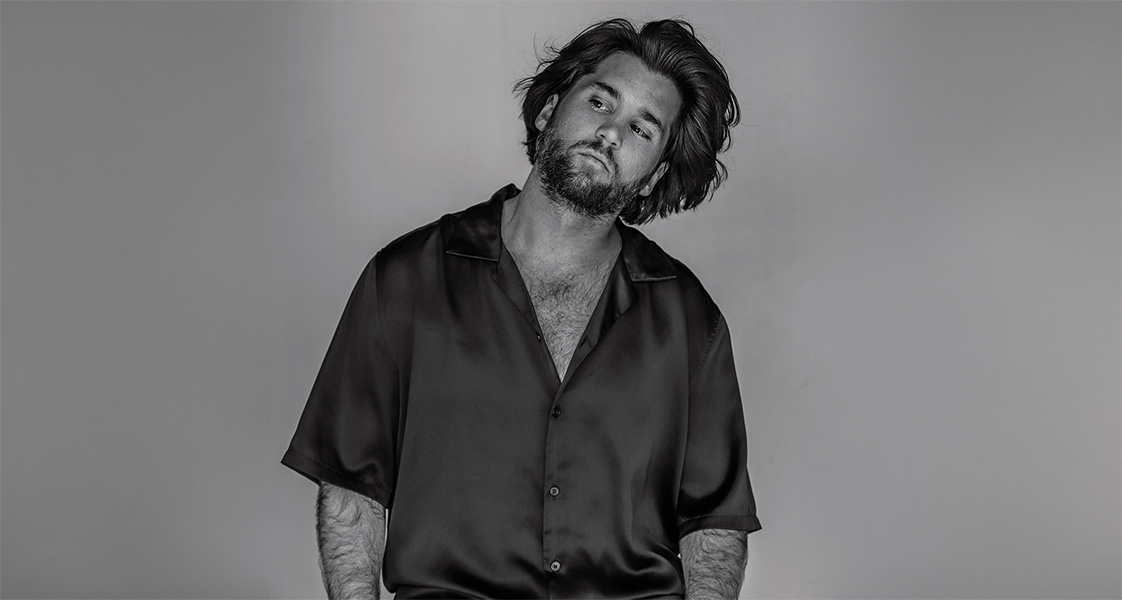

From the raw energy of UK garage and reggae sound system culture to the soulful edges of broken beat, Last Nubian has built a reputation for music that defies easy categorisation. As he joins Freerange Records’ 30-year celebrations with the standout cut ‘Magic’, he reflects on collaboration, live performance, underground music culture and why the weirdest sounds often leave the deepest mark.
WWD: You grew up surrounded by classic UK club sounds: grime, garage, funky house and reggae. Which of those early influences still sits closest to the surface when you’re producing today?
The last three are genres I still draw heavily from. There’s a rawness to early garage that you just can’t beat. I love sampling, and you can always find the best samples in garage. With funky house, there’s brilliant songwriting and arrangement. It’s more than just a loop. With reggae, it’s the rhythm, the bass and, most importantly, the message, whether that comes through the vocals or the dubs. You wouldn’t have any of the above genres without reggae.
WWD: Was there a particular moment or record in your teens that made you think: “I want to make music myself?”
To be honest, I never imagined myself producing music in my teens. I was happy just listening to 20-minute versions of 30-second J Dilla tunes. It wasn’t until I started going to events and clubs and experiencing dance music on proper sound systems that I wanted to start dabbling in making music myself.
WWD: Your work often blends broken beat, house, and jazz. What drew you to that intersection rather than staying inside one lane?
For me, you don’t really have house or broken beat without jazz. They’re tied together, or at least that’s the case with the house I’m into. The main difference between broken beat and house is the drum rhythm that sits underneath everything.
WWD: Over the past few years, you’ve carved out a distinct identity across labels like Tiff’s Joints, Woop, and Flat White. What do you think people hear in a Last Nubian track that makes it yours?
Pure chaos, most likely, ha! You either love it or hate it.
WWD: Your ‘Ghetto Child’ EP picked up support from Pete Tong and Mixmag. Did that attention change anything for you creatively or personally?
Creatively, it made me realise that you can truly make whatever you want and still get played on platforms like BBC Radio. I think that’s crucial to staying true to your own vision and making the music you actually want to hear.
WWD: 2023’s ‘We Got There First’ felt like a real statement project. What did that EP unlock for you in terms of confidence or direction?
This was a project with my long-time production collaborator, Dougan. It marked the beginning of us creating many more projects together.
WWD: Freerange has admired your work for a long time. How did the conversation about contributing to Volume 5 first begin?
Jimpster and I have been in touch for a long time. I’ve been a fan of Freerange for years, so I’m really grateful that he’s always been open to me doing something with the label. We haven’t released a full project together yet, as the timing hasn’t quite aligned, but it’s definitely something I’d love to do in the future.
WWD: Your track ‘Magic’ sits right at the heart of the EP. What was the spark behind that tune, and what made it feel right for Freerange’s 30-year celebration?
For a while now, I’ve been heavily studying great songwriting in house music. I’m talking about tracks with proper song structures, lyrics, melodies and arrangements. Magic was one of those tunes where, underneath the heavy drum rhythm, there was an actual song. At least, I hope so, ha!
WWD: You teamed up with Tommy Rawson and brought Redbird into the mix. What did each collaborator bring to the track that you couldn’t have created alone?
Tommy Rawson always comes up with interesting chords and melodies. His music reminds me of The Neptunes. With this track, we went through a lot of different versions. Some parts stuck, others didn’t, but it was that back-and-forth process that kept the song alive rather than letting it become another idea sitting on a hard drive.
WWD: Freerange is known for its deep, soulful, underground house. How did you approach making something that felt true to their DNA while still sounding unmistakably like you?
I didn’t necessarily make this track specifically for Freerange, but once it was about 90% there, I knew it could be a great fit for the label. For that final 10%, I worked with Jamie to really polish the track, and I ended up getting some great insight into his approach to production.
WWD: When you’re blending broken beat, house and jazz, what usually comes first: rhythm, harmony or texture?
It really depends. Typically, I’ll start with the rhythm and textures before getting lost in experimenting with harmony for a long time.
WWD: You’ve been moving into live performance recently. How has playing live changed the way you think about producing in the studio?
Playing live can completely change the way you approach making a song when it’s intended for a live setting. The band and I had a nightmare in the early days trying to translate electronically produced music into a live setting, with all the samples and random textures. Making music with live performance in mind really makes you think about the arrangement and the different moments within it.
WWD: Your Balamii residency showcased a very broad musical palette. How does DJing feed back into your production work?
DJing only feeds back into my production when I’m making tunes specifically for the club. Otherwise, I try not to let it influence my process too much. You can pigeonhole yourself if you’re always thinking about how a track might mix with another or whether it’s “DJ-friendly” for other people.
WWD: London’s underground scene is constantly shifting. Where do you feel your sound sits within the current landscape?
In the grand scheme of things, our scene is quite niche. As for my own sound, I’d like to think it sits within that realm of the weird, deep and soulful.
WWD: Looking ahead, what do you want people to feel or understand when they hear the name Last Nubian?
Good-quality underground sounds.
WWD: Thanks for the chat 🙂
‘Magic’ is available here