
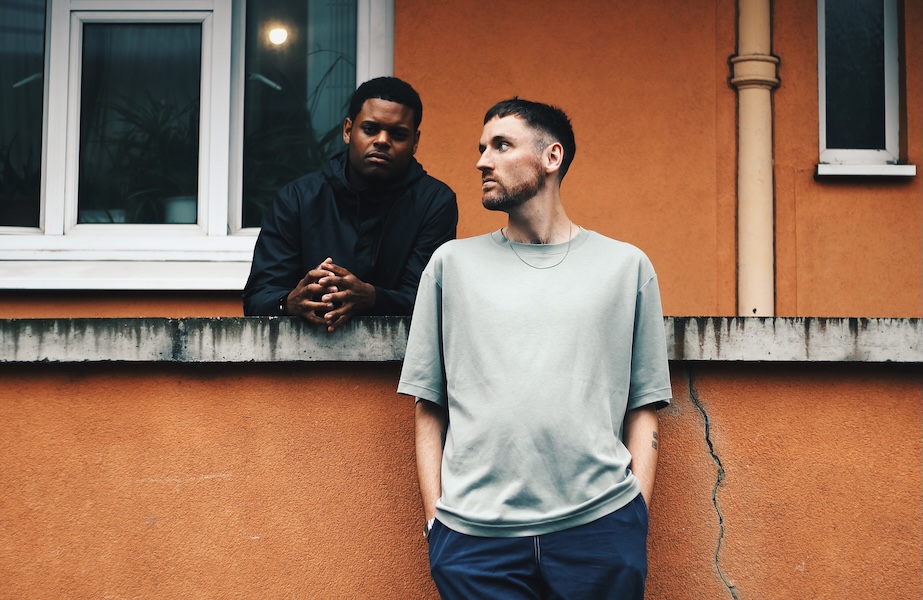


Kassian have never been easy to pin down. Drawing from techno, garage, breaks and beyond, the London duo have built a reputation for following instinct rather than genre boundaries.
Their new EP, ‘Gradients,’ finds them embracing a brighter, more melodic sound while retaining the weight and energy that has always defined their work.
We caught up with the pair to discuss the release, their evolving studio process, the road towards album number two, and their first fully live show.
WWD: ‘Gradients’ feels noticeably brighter and more melodic than some of your previous work. Was there a conscious decision to move away from the darker aesthetic dominating much of contemporary club music?
Yeah, it was pretty deliberate. A lot of what we were hearing out in the clubs and receiving through our promos inbox had become really dark and heads down, and there’s a place for that. Similarly, our last EP on Unknown to the Unknown was very rooted in dark, dubby influenced garage, so we wanted to make records that lift a room in a different way. The low end is still rooted in techno, so the drums and bass have proper weight, but on top of that we let the melodies and vocal hooks breathe. Bright doesn’t have to mean soft. It can still hit hard, and K7 felt like the perfect home for something like this, as a natural progression from our melody focused album, which tapped into a similar energy.
WWD: The EP arrives between ‘Channels’ and your next album. Do you see ‘Gradients’ as a transition point for Kassian, or is it a statement of where you’re heading creatively?
A bit of both. Channels was very much a home listening record, whereas album number two is being made with the big room in mind. Gradients is the first real glimpse of that transition, while still drawing on elements of our previous K7 EPs. We’re also starting to build towards how we’ll be working for the foreseeable future: jamming live on hardware and developing ideas with the live show in mind. That’s probably the biggest shift for us, so we’re gradually introducing new techniques and experimenting with different approaches along the way.
WWD: ‘Channels’ was shaped by the isolation and introspection of the lockdown years. What experiences or influences informed the more physical, club focused energy of ‘Gradients?’
Mostly just being back in rooms, clubs, and in the studio. Channels started in 2020, with us sending project files back and forth when we couldn’t work on music in person, and it carried a lot of that period: isolation, loss, and looking back at what got us into music in the first place. Since then, we’ve been DJing, touring, doing our Rinse show, and running Faux Poly parties, and you soak up the energy of a crowd again. Being back in the studio, playing off each other in real time, made everything feel more physical. Gradients is really a reaction to that and us bringing little sections of dance music together that we’ve loved over the years.
WWD: You’ve always occupied a space outside any single scene or genre. How important is that creative independence to the identity of Kassian?
It’s pretty much the whole thing. We grew up on London’s mix of sounds, things like the Hessle Audio run, Objekt, and Paleman, where records didn’t need a neat genre tag to tear up a room, and that’s always stuck with us. If we tied ourselves to one scene, we’d end up chasing whatever that scene wants next. Staying outside means we can make a breaks and baile record like Supercontinent, a downtempo album like Channels, and then something like Gradients without feeling like we’re betraying anything. It’s the same ethos we run Faux Poly with: club music that honours its roots but doesn’t colour inside the lines.
WWD: This EP was built largely through live hardware performances rather than detailed in the box production. What does that approach allow you to achieve that software alone cannot?
Mainly, it gets you out of your head. In the box, you can tweak something forever and never commit. When you’re jamming on hardware, you’re performing, so you react to each other and to what the machines are doing, and you commit to a take. That brings a looseness and a sense of movement that’s really hard to fake by drawing in automation. The machines also throw up textures and little imperfections you’d never think to programme. Then we’d take the best jams and shape them into tracks, rather than building them piece by piece from the start.
WWD: You’ve described the value of “happy accidents” in the studio. Can you recall a moment on Gradients where an unexpected mistake or discovery became a defining part of a track?
On ‘Blush’, the main drone came from a sequence that drifted slightly out of sync with the drums while we were jamming. It made the melody loop in these odd arcs against the groove. Our first instinct was to fix it, but when we listened back, it was the best part of the take. That push and pull is what gives the track its character, and it’s exactly the kind of thing you’d never plan in the box. We also took some time away from the screen, switching roles and rearranging elements to reveal new spaces and grooves, finding the pockets for the main melody and the vocal stabs that join the sections and really make the track flow.
WWD: With your first fully live show planned for 2027, has preparing for the stage changed the way you write and arrange music in the studio?
Massively. We’re now writing with the question, “Can we actually play this?” in mind. Tracks are built from parts we can perform and manipulate live, rather than stacks of layers that only exist in a session file. That’s made arrangements simpler and more direct in a good way: fewer elements, each doing more. It also means the studio and the stage are starting to feel like the same thing. Gradients was really the first test of that.
WWD: The title ‘Gradients’ suggests movement and transition. Does the name reflect the musical journey across the EP or a broader shift in the Kassian story?
Both. Musically, the four tracks shift in colour and intensity. ‘Blush’ is warm, ‘Ritmo’ gets more physical, ‘Inner Dance’ is quite dark, and ‘Sweat’ sits somewhere in between. But it also describes where we are as a project. We’re not sure where we will be sonically with the album just yet, but Gradients also signifies movement.
WWD: Despite its dancefloor focus, the EP contains plenty of emotion and atmosphere. How do you strike a balance between functionality for DJs and emotional depth for listeners?
For us, the groove comes first. If it doesn’t work on a system, it doesn’t matter how pretty it is. Once the drums and bass are doing their job, we’ve got room to add the melody, the vocal fragments, and the atmosphere that make you feel something. We also try to keep intros and outros DJ friendly so the tracks are easy to use. With Channels, we said you don’t need to be in the club to enjoy club music, and Gradients is kind of the flip side: club records that still mean something when you’re not in one.
WWD: Tracks like ‘Blush’ and ‘Sweat’ introduce vocal fragments and hooks that feel more prominent than before. What role do vocals play in your creative process, particularly when working within instrumental club music?
We treat vocals more like another instrument than a song. A fragment, a phrase, or a whisper can give a track a human focal point and a hook to latch onto, without turning it into a song with verses and choruses. There’s a lot of great vocal stuff happening in the underground right now, and we wanted to nod to that without falling into the obvious tropes. The whispered vocal on ‘Sweat’ and the sound system style call on ‘Inner Dance’ are good examples of that.
WWD: ‘Ritmo’ and ‘Inner Dance’ both carry a strong sense of movement and physicality. Do you test tracks in clubs while they’re still evolving, or do you trust your instincts in the studio?
A bit of both. We’ll often test rough versions in our sets or on the Rinse show to see how they sit next to other records, and you learn a lot from that. Sometimes a breakdown is too long, or the bass isn’t sitting right on a big system. But we try not to overtest, because you can end up making something purely functional. Gut feeling in the studio gets the track 80% of the way, and the floor tells you what the last 20% needs. We tested Ritmo at Sisyphos in Berlin and it went down really well, and we tested Inner Dance in Amsterdam. Two very different settings, but they were both enough to know we were happy with the final tracks.
WWD: You’ve built a strong relationship with !K7 over several releases. What is it about the label that continues to make it the right home for Kassian’s music?
They’ve always let us move around. We’ve given them breaks, a downtempo album with live cello and keys, and now a bright, hardware built club EP, and they’ve backed every turn. That trust is rare. They’ve got real history and reach, but they still treat it as a creative partnership rather than just a release schedule. They’ve also got behind the live show and album two, which means a lot.
WWD: Hardware production often comes with limitations as well as possibilities. Do restrictions help focus your creativity, or can they sometimes be frustrating?
Both, definitely. There are days when a machine just won’t sync or you can’t recall a sound you made the day before, and that can be frustrating. Maybe someone may have changed the settings on the synths in our studio. But limits are mostly a good thing. When you’ve only got a few boxes and a certain number of hands, you have to make decisions, so you get to the idea faster and stop endlessly auditioning presets. Most of our favourite moments came from working around a limitation rather than having every option available. Even with a messed up synth, we are at a place now where we can be critical with the knowledge we’ve gained along the way to confidently recreate any sound even better the next day.
WWD: As electronic music technology becomes increasingly precise and automated, do you think listeners are craving more human and imperfect elements in club records?
We think so. When everything can be quantised, tuned, and generated perfectly, the little human things start to stand out: a bit of swing, a take that’s slightly loose, a filter moved by hand. People can feel when something was played rather than programmed, even if they can’t say why. That doesn’t mean rejecting technology. We use it all the time. It’s more about keeping a person’s fingerprints on the record.
WWD: Looking ahead to the second album and live show, what aspects of Kassian are you most excited for audiences to discover in this next chapter?
Mostly the energy of us actually playing. People have heard our records and our DJ sets, but they’ve never seen the two of us jamming and reacting to each other live. That’s where these tracks were born, and it’s where they’ll keep changing. The album will carry that same physical, melodic feeling, but go further with it. It feels like the most “us” we’ve ever been, and we can’t wait to share it.
WWD: And we can’t wait to hear it! Thanks for the chat, guys 🙂
The ‘Gradients’ EP is available here