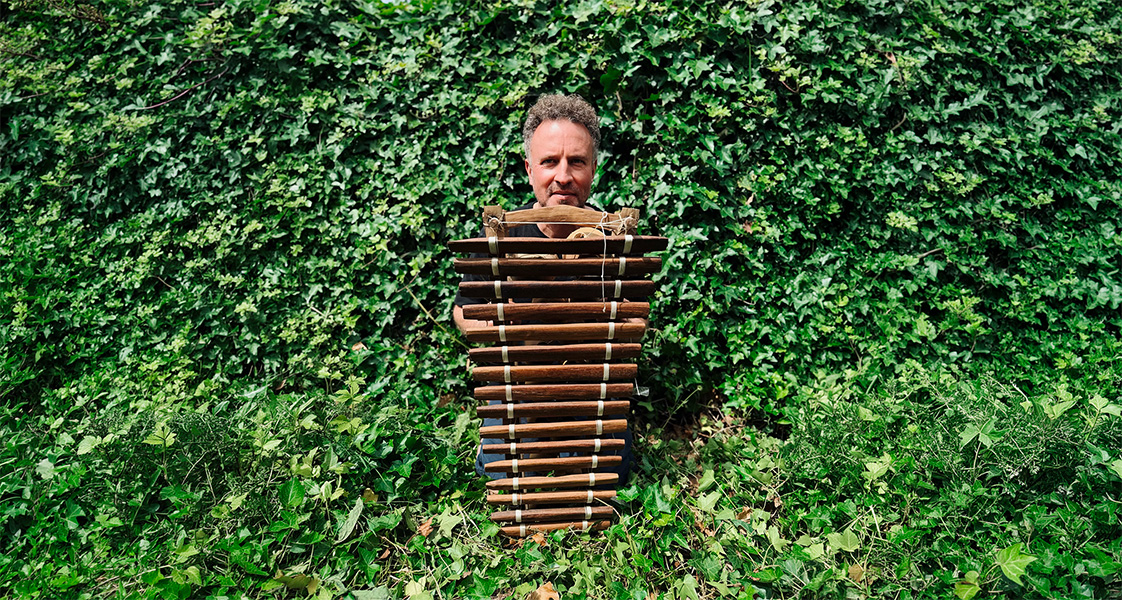

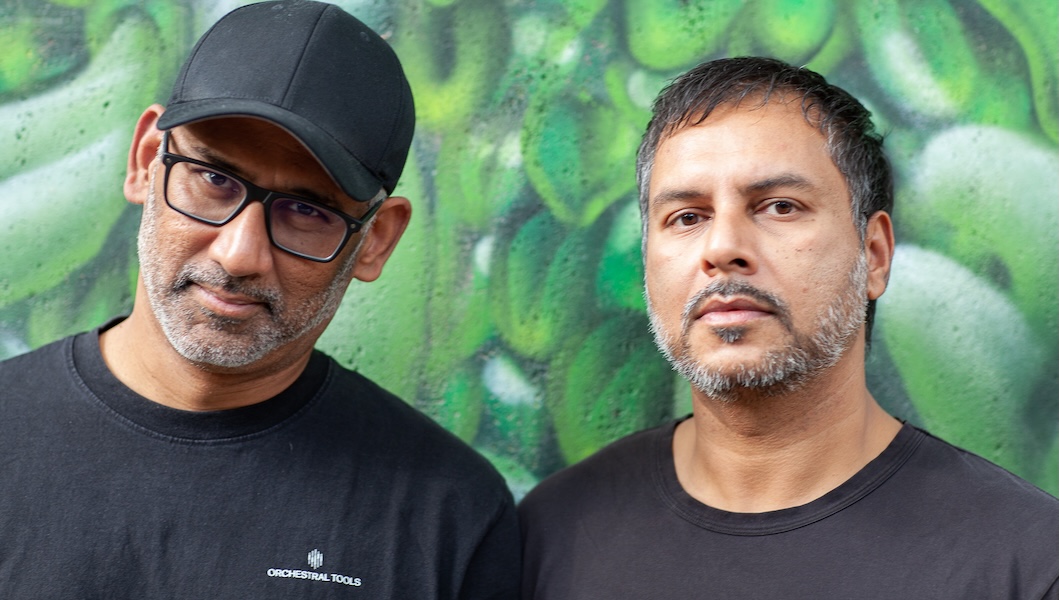
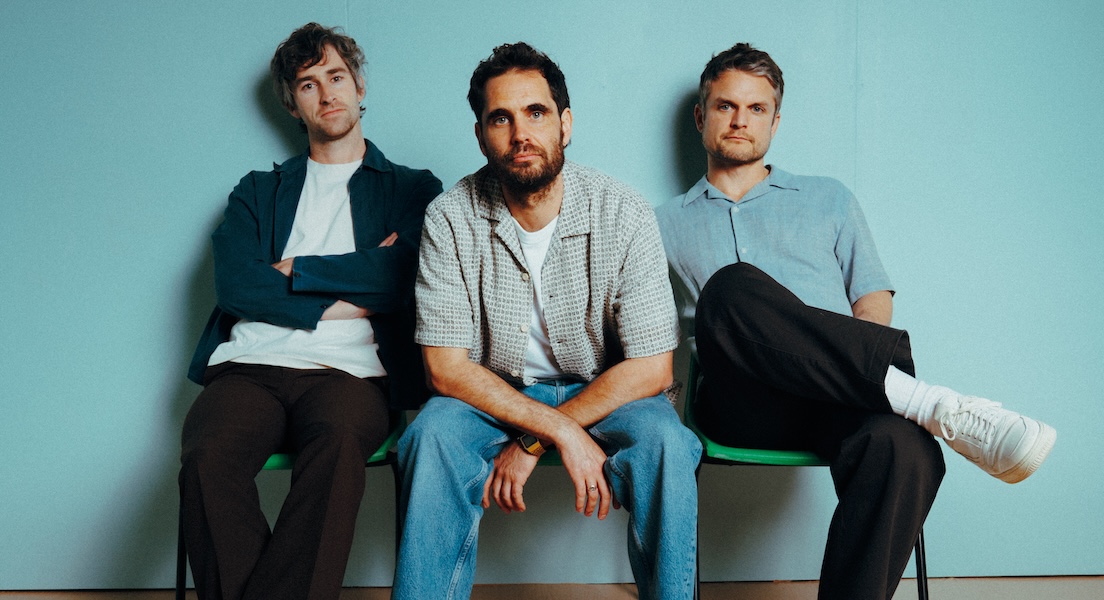
With ‘Organic Matters,’ Balaphonic continues to carve out a space where global percussion, Mancunian irreverence, and electronic production coexist. Rooted in the instincts of a lifelong drummer, the project thrives on the harmonic interplay of acoustic instruments and the spontaneity of improvisation. These new tracks reflect not only years of rhythmic study but also the friendships, collaborations, and serendipitous moments that have shaped the artist’s musical journey – all of which he discusses with When We Dip!
WWD: There is a tremendous sense of rhythm in your new ‘Organic Matters’ EP. What does rhythm allow you to express in your Balaphonic project that melody alone cannot?
Thanks so much. I am first and foremost a drummer and percussionist so very much approach everything I do from that perspective and I have always been fascinated by the harmonic interaction between different percussion instruments and parts. The Balaphonic project was initially built around the balafon, a West African xylophone which I generally used as a starting point for tracks and ideas. I am no virtuoso but it immediately gave me both a rhythmic and harmonic or melodic starting point.
As things have developed I have explored more of the instruments in my ever expanding collection in a similar way. For example the track Boxfresh on this record started with patterns played on a beat up and very cheap tongue or slit drum, basically a wooden box with slits cut in it. I happened on a shop in Santa Cruz, California when touring the States a few years back which had some mind blowingly amazing ones in but they were well out of financial reach so I bought this one off E Bay for twenty quid only for it to be stuck on a shelf for years until I decided I had to do something with it. I found beaters that sounded good on it and started to record patterns which I then used as the basis for the track. When it came to adding melodic parts I suddenly found that it was very much in its own relative pitch, so the keyboards I added had to be tuned a little north of standard four hundred and forty hertz, probably closer to Baroque music as I have just found out via Google. It was a little tricky but I loved the fact that it was the beat up old wooden box that shaped the whole tonality of the piece. I have become a big subscriber to the concept that every drum is beautiful.
Funnily enough I played the album in demo form to my neighbour Helen, a lecturer in music and acoustics at Salford Uni, who absolutely loved it until this track came on. I love the rest but hate this one. She quite possibly has perfect absolute pitch and it was grating as a result, apparently Mozart was the same, or the track is just awful. I will let you decide. Hahaha.
WWD: The Balaphonic releases have been inspired by many musical traditions. How do you decide which global musical traditions to explore for each new Balaphonic release?
I have spent much of my life studying jazz and through that Brazilian, African and Afro Cuban rhythms, both semi formally and otherwise. Again, firstly as a drummer but perhaps more so as a record and music collector. It is an ongoing love fuelled journey. As such, when it comes to the instrumentation, particularly percussion wise I have some immediate vocabulary or reference points, however there is not always a conscious decision that I am going to play this rhythm or in that particular style even though the influences and references might be there and come out in the process. I am also always conscious that it is really my way of understanding all this music from the perspective of a drummer and clubber from the melting pot of Manchester and I have always felt the need to express that primarily, so there is certainly a lot of respect for the traditions but always with a healthy dose of Mancunian irreverence. Apologies to any purists whose rules might have been broken.
WWD: What personal experiences or memories shaped the emotional tone of ‘Organic Matters?’
Oh wow, that is a great question. I think musical friendships old and new have shaped this record a great deal, particularly through the collaborations. The Flora and Diana Purim track Switch comes from a track initially written in two thousand and four or five which was hugely pivotal personally. I have gigged with Robin Dewhurst, Dew Drops, for many happy years, Katya Gabeli, Life of Strings, I have known online for a long time, Joe Botham, Baleardelica, more recently through working on his Adventurers of the Love Generation album projects, but also the friendship and relationship I have built with Lisa Dea through doing the artwork for both this record and the previous Resolution Revolutions as well as my own Well Cut Records label, and definitely that of Phil Cooper at NuNorthern Soul who has been a rock in terms of support throughout and really helped shape both the releases, both in terms of input and ideas but also by challenging me to reinforce my ideas and concepts. I would like to think that all this positive energy does shine through in the music.
WWD: How do you approach writing music that feels both rooted in tradition and forward looking at the same time?
As mentioned above, I have spent many years in clubs and on dance floors, always excited to hear and experience new sounds. As a DJ I am on an eternal quest to find brand new music, from downbeat to drum and bass and everything in between from all over the planet. However, the DJs and producers who always excite me most are those who are referencing back or across. Ultimately to move forward you have to provide context. It has to be rooted. It might not be heard by ninety nine percent of the people listening, but the fact that you know where you are coming from will always resonate, even if you are referencing by ripping up the rule book. Also, as much as I am digging through new music I am also always taking inspiration from my ever expanding dusty record collection. Some of the edits I have been putting out recently with my DJ partner Anthony Collins as Old Mervue Edits have been about taking some of these records and putting them into a format where I might be able to reference them easily in the mix with more contemporary sounds and grooves.
WWD: What have been the most surprising discoveries you have made while working with Afro Cuban and Brazilian percussion?
The nice thing is that there is always something to learn. As much as you might achieve some sort of fluency or understanding there is always someone with mastery who is going to blow your mind. It is incredible in this age of Instagram reels and the like just how much innovation and mastery there is to be witnessed just as you sit on the loo scrolling away. So many people are doing creative things not only with the instruments themselves but also in the techniques they are using to create new sounds.
One relatively recent discovery I found and have used on the last two records, actually on Boxfresh again on this one, is that in partially filling an udu, a Nigerian clay pot drum which you play with the hands, I have a plastic one for this purpose, with water and tipping it as you play you can alter the pitch of the drum and create melodic plouf or splashing sounds. As mentioned you can hear it on Boxfresh on this record or Udders on Resolution Revolutions.
WWD: How do you maintain a sense of cohesion across Balaphonic when each track often involves different collaborators and influences? What are the themes within your music?
To be honest it is not something at the forefront of my mind, indeed I do really like records that are a journey or tell a story in terms of mood and vibe, but I guess like a good DJ set this only really works if there is a tangible link between the tracks. Each track needs to make sense of the last and next.
Ultimately though I would like to think that despite the different tempos, time signatures and vibes all the tracks are quite rooted in concept and aesthetic. I am not necessarily using the same instruments or patterns on each track but I do have a strong concept for an overall vision or sound in terms of production values and the story I am trying to tell and that is something I am constantly trying to explore and refine.
WWD: What role does improvisation play in your studio sessions for Balaphonic? Or is it all painstakingly planned out?
It most definitely is not planned out. To be honest most of the ideas from my side come quite literally playing, whether that is messing with an instrument or groove or humming to myself or thinking of something I might have heard somewhere. Once I have a firm groove or structure though it gives me even more liberation to explore. I might start singing ideas, the vocal choir on Balaventurers came about this way very late at night, and then translate that to a keyboard or other instrument or I might go for long takes over the groove that I will initially structure with loops. I upgraded my computer system part way through recording this record and I have so much more facility to do this as a result. Recently I have started to play full improvised takes, especially with smaller textural sounds. They might be quite buried in the mix but it gives that energy and dynamic of constant movement which I really love.
WWD: How do you translate the warmth and detail of live instrumentation into a modern electronic production environment?
The technology around mixing nowadays is ever expanding and ever better sounding. I could not imagine having achieved some of these sounds even just a couple of years ago. Some of the plugins available sound wonderful and the possibilities for multi track recording and editing are huge even with a relatively modest computer setup.
In terms of recording I am very lucky. I have a vintage AMEK desk which was actually built just a couple of miles down the road in Salford by my friend’s brother. It has Neve designed pre amps which are wonderful for clarity and punch but also add analogue warmth if pushed. I have also got some nineteen seventies BBC pre amps which have that big open sound and some nice and trashy microphones as well as a big collection of instruments. This is most of the battle won already.
However, it is just as important to have a concept or ideal towards which you are striving and this is always down to constantly listening. As mentioned above I really love the detail and dynamics of a lot of sixties and seventies jazz records, Cti records, MPB and the clarity of ECM, but I am also trying to balance that with the weight and presence of more modern electronic music, not just for its own sake but also from the perspective of playing out through a system as well as listening in more intimate settings.
WWD: What do you think listeners connect with most in the Balaphonic sound and why?
I was really blown away by the response to the last record, particularly in that it was not designed to immediately appeal to any particular scene or sound, but that it definitely did seem to connect with many. I was quite taken aback by how many people sent videos of them listening to the music in different settings, many in gardens or on beaches, some out in the middle of the countryside, quite a few people got in touch saying that their kids really liked it.
The music was largely written in the summer sunshine and we were lucky to release in that weather too. It has been the same with this one and hopefully we will have that too. A lot of my earlier Balaphonic releases on Well Cut were inspired by time spent DJing in Bali so I would like to think there is some of that energy and warmth throughout. I think that the fact that the instrumentation and the process around creating the tracks has been very much organic connects too. There is something about hitting a skin or piece of wood or plucking or stroking a string that has an immediate human resonance, even if it is manipulated by technology later in the process.
For me a lot of the sounds relate to elements in nature, water splashing or flowing, waves and wind, wooden sounds, maybe that is something to do with it.
The way I am conceiving music is really about resolving my own relationship with acoustic instruments and playing against my love of and life in electronic music and clubs. I am sure that resonates with a lot of people nowadays, especially given that we are increasingly saturated in music which has very little human or emotional investment or for that matter return. It is now often simply a product for many, a means to an end. It definitely has its place and purpose, but this project has become very much the antithesis in many ways. It has been about exploring sounds and grooves and friendships initially without any bigger agenda than just that. Without wanting to sound overly trite all of the tracks were made with a lot of love, they all were triggered by and triggered lots of emotions whilst making them. There is a positivity and peace about the process that I do not always feel in other life situations and I would really like to think that comes across.
WWD: How has creating Balaphonic changed the way you think about your own musical journey?
I am definitely learning lots through it, not just in terms of the technicalities of recording and mixing, but also in having the confidence and patience to let things happen, hear and explore ideas that might not immediately fit into a particular box and further explore artists and music that I might not otherwise. It has also reaffirmed my relationship with and love for making vinyl records which for a while became a little out of focus and reach, and as such I am ever more grateful for the opportunities and support given by those around me in helping me make it happen.
WWD: Wise words! Thanks for the chat 🙂
Thanks When We Dip!
‘Organic Matters’ is available here.